Bathtub curve
{{Short description|Curve for failure rates over time}} [[File:Bathtub curve.svg|thumb|right|350px|The 'bathtub curve' hazard function (blue, upper solid line) is a combination of a decreasing hazard of early failure (red dotted line) and an increasing hazard of wear-out failure (yellow dotted line), plus some constant hazard of random failure (green, lower solid line).]]
In [[reliability engineering]] and [[deterioration modeling]], a '''bathtub curve''' is a [[failure rate]] graph that curves up at both ends, similar in shape to a [[bathtub]].{{cite book |last1=Smith |first1=David J. |date=2022 |title=Reliability, Maintainability and Risk |edition=10 |publisher=Elsevier |chapter=Chapter 2 - Understanding Terms and Jargon |doi=10.1016/B978-0-323-91261-7.00007-1 |isbn=978-0-323-91261-7 |pages=22-23}} The term can also apply to any graph with this shape.{{cite web |title=Bathtub-Shaped Distribution |url=https://www.statisticshowto.com/bathtub-shaped-distribution/ |website=Statistics How To |archive-url=https://web.archive.org/web/20250318104402/https://www.statisticshowto.com/bathtub-shaped-distribution/ |archive-date=18 March 2025 |access-date=28 November 2025}}
Many but not all electronic consumer product life cycles follow the bathtub curve.{{Cite book|author=J. Lienig, H. Bruemmer|title=Fundamentals of Electronic Systems Design|pages=54|publisher=Springer International Publishing|date=2017|isbn=978-3-319-55839-4|doi=10.1007/978-3-319-55840-0}} It is difficult to know where a product is along the bathtub curve, or even if the bathtub curve is applicable to a certain product without large numbers of products in use and associated failure rate data.
In reliability engineering, the [[cumulative distribution function]] corresponding to a bathtub curve may be analysed using a [[Weibull chart]] or in a reliability contour map.
==Description== The bathtub curve has 3 regions: #The first region has a decreasing [[failure rate]] due to early [[failure|failures]] (a.k.a. the "Infant Mortality Phase"). #The middle region is a constant failure rate due to [[random]] failures (a.k.a. the "Useful Life Phase"). #The last region is an increasing failure rate due to [[wear-out]] failures (a.k.a. the "Wear-Out Phase").
A product is said to follow the bathtub curve if in the early life of a product, the failure rate decreases as defective products are identified and discarded, and early sources of potential failure such as manufacturing defects or damage during transit are detected. In the mid-life of a product the failure rate is constant. In the later life of the product, the failure rate increases due to wearout.
If products are retired early or have decreased usage near their end of life, the product may show fewer failures per unit calendar time (but not per unit use time) than the bathtub curve predicts.
Some manufacturers [[burn in]] or [[product testing|test]] their products in an attempt to reduce early failures.{{cite web |last1=Klein |first1=Andy |title=Drive Failure Over Time: The Bathtub Curve Is Leaking |url=https://www.backblaze.com/blog/drive-failure-over-time-the-bathtub-curve-is-leaking/ |date=26 October 2021 |publisher=Backblaze |archive-url=https://web.archive.org/web/20211027123712/https://www.backblaze.com/blog/drive-failure-over-time-the-bathtub-curve-is-leaking/ |archive-date=27 October 2021 |access-date=28 November 2025}}
==See also== *[[Gompertz–Makeham law of mortality]]
==References== {{Reflist}}
==Further reading== *{{cite journal |last1=Klutke |first1=G. |last2=Kiessler |first2=P.C. |last3=Wortman |first3=M. A. |title=A critical look at the bathtub curve |journal=IEEE Transactions on Reliability |issn=0018-9529 |doi=10.1109/TR.2002.804492 |volume=52 |issue=1 |pages=125–129 |date=March 2003 }}
{{DEFAULTSORT:Bathtub Curve}} [[Category:Reliability engineering]] [[Category:Engineering failures]] [[Category:Curves]]
From MOAI Insights
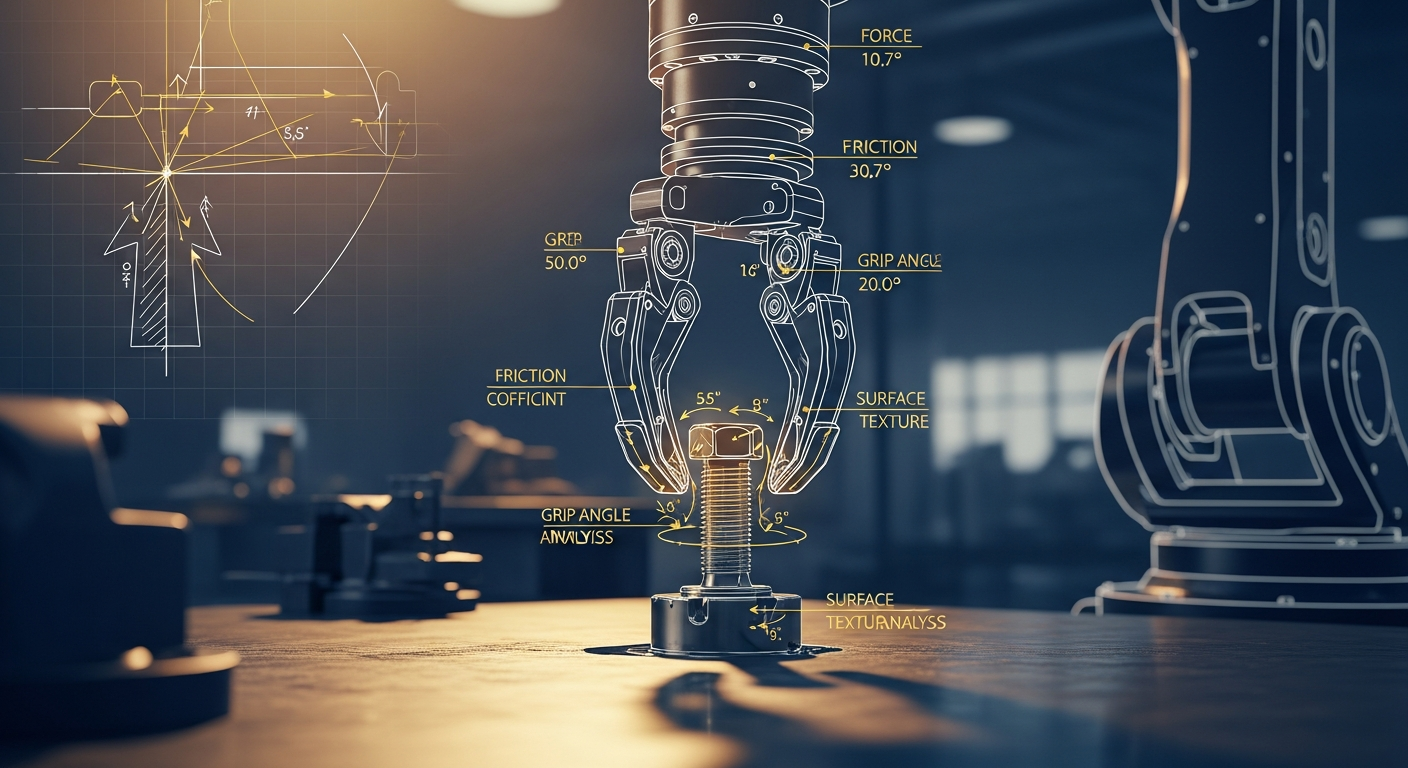
로봇은 왜 볼트를 떨어뜨리는가 — Physical AI가 공장에 필요한 진짜 이유
AI가 데이터 패턴만 외우는 시대는 끝나고 있다. 물리 법칙을 이해하는 Physical AI가 제조 현장에 왜 필요한지, KAIST 교수와 자동차 부품 공장 팀장이 볼트 하나를 놓고 이야기한다.

디지털 트윈, 당신 공장엔 이미 있다 — 엑셀과 MES 사이 어딘가에
디지털 트윈은 10억짜리 3D 시뮬레이션이 아니다. 지금 쓰고 있는 엑셀에 좋은 질문 하나를 더하는 것 — 두 전문가가 중소 제조기업이 이미 가진 데이터로 예측하는 공장을 만드는 현실적 로드맵을 제시한다.
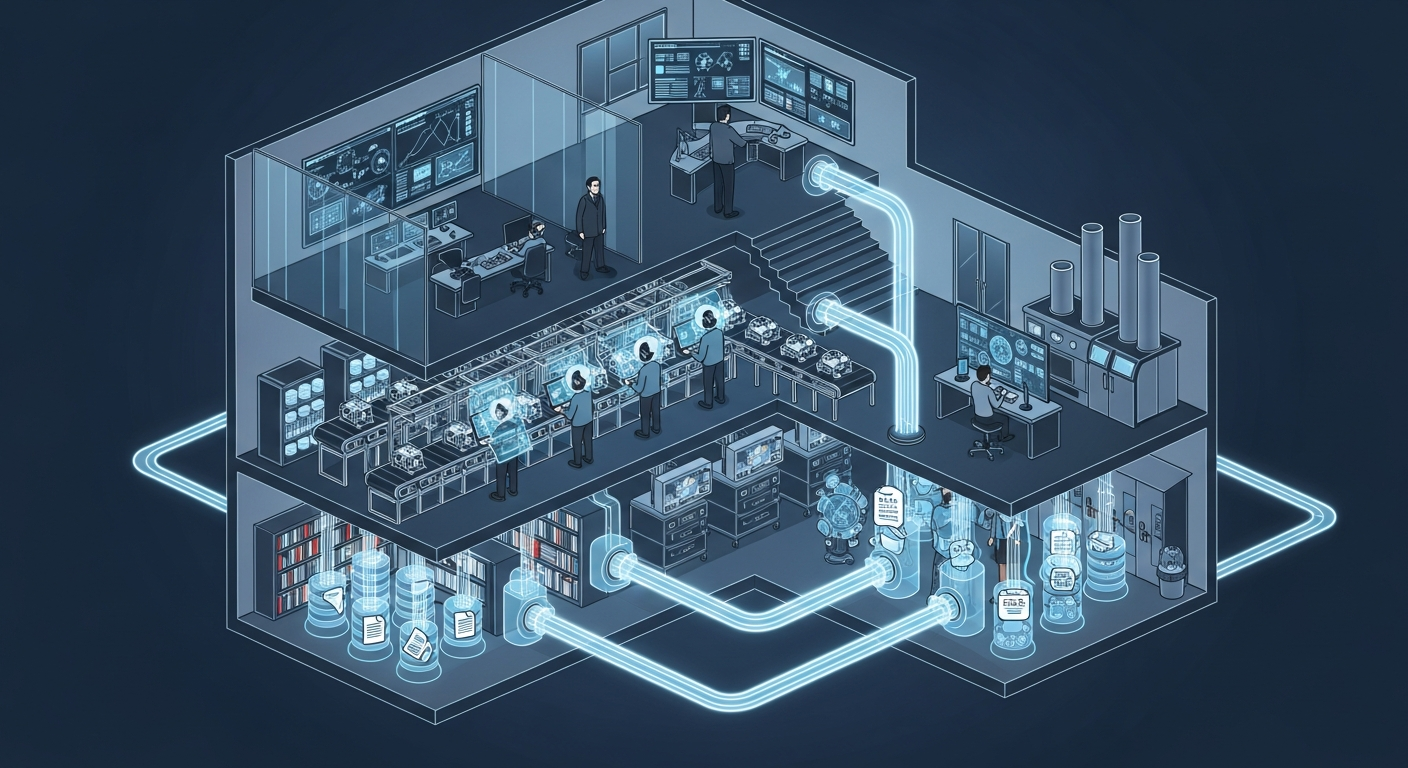
공장의 뇌는 어떻게 생겼는가 — 제조운영 AI 아키텍처 해부
지식관리, 업무자동화, 의사결정지원 — 따로 보면 다 있던 것들입니다. 제조 AI의 진짜 차이는 이 셋이 순환하면서 '우리 공장만의 지능'을 만든다는 데 있습니다.
Want to apply this in your factory?
MOAI helps manufacturing companies adopt AI tailored to their operations.
Talk to us →