Harold F. Dodge
{{short description|American quality expert (1893–1976)}} {{Use mdy dates|date=June 2025}} {{More citations|date=June 2025}} {{Infobox person | name = Harold F. Dodge | image = | alt = | caption = | birth_name = Harold French Dodge | birth_date = {{birth date|1893|1|23}} | birth_place = [[Lowell, Massachusetts]], U.S. | death_date = {{death date and age|1976|12|10|1893|1|23}} | death_place = [[Mountain Lakes, New Jersey]], U.S. | resting_place = | other_names = | education = [[Massachusetts Institute of Technology]] ([[Bachelor of Science|BS]])[[Columbia University]] ([[Master of Arts|MA]]) | occupation = {{hlist|Statistician|engineer|consultant|educator}} | years_active = | known_for = | notable_works = | spouse = {{marriage|Mildred Grace Lovelass|1922}} | children = 3 | father = [[William Hanson Dodge]] | awards = [[Shewhart Medal]] }} '''Harold French Dodge''' (January 23, 1893 – December 10, 1976) was one of the principal architects of the science of [[statistical quality control]]. He is known for his work in originating [[acceptance sampling]] plans for putting inspection operations on a scientific basis in terms of controllable risks.
==Early life== Harold French Dodge{{Cite book |url=https://archive.org/details/catalogue1922colu/page/n323/mode/2up |title=Catalogue, 1922–1923 |year=1923 |author=Columbia University in the City of New York |pages=314–315 |via=[[Archive.org]] |access-date=2025-06-21}}{{Open access}} was born on January 23, 1893,{{citation needed |date=June 2025 |reason=full name and birth date}} in [[Lowell, Massachusetts]].{{Cite news |url=https://www.newspapers.com/article/daily-record-harold-f-dodge-12-dec-197/174943713/ |title=Harold F. Dodge |date=1976-12-12 |newspaper=Daily Record |page=2 |via=[[Newspapers.com]] |access-date=2025-06-20}}{{Open access}}{{Cite web |url=https://asq.org/about-asq/who-we-are/bio_dodge.html |title=Harold F. Dodge |website=[[American Society for Quality]] |archive-url=https://web.archive.org/web/20160121123949/https://asq.org/about-asq/who-we-are/bio_dodge.html |archive-date=2016-01-21 |url-status=dead}} His father was the photographer [[William Hanson Dodge]].{{citation needed |date=June 2025}} Dodge graduated with a [[Bachelor of Science]] in electrical engineering from the [[Massachusetts Institute of Technology]] in 1916. He graduated with a [[Master of Arts]] in mathematics and physics from [[Columbia University]] in 1922.
==Career== Dodge worked as a quality result engineer at [[Bell Labs]] in New York City from 1917 to 1958. In the early 1930s, he worked with [[Harry Romig]] in developing the Dodge-Romig Sampling Inspection Tables. At Bell Labs, he also worked with [[Walter Shewhart]], [[George D. Edwards|George Edwards]], [[R. L. Jones]], [[Paul Olmstead]], [[E.G.D. Paterson]], and [[Mary N. Torrey]].
During his tenure with Bell Labs, he was involved in developing some of the basic concepts of acceptance sampling alongside his peers, including [[consumer's risk]], [[producer's risk]], double sampling, [[lot tolerance percent defective]] (LTPD) and [[average outgoing quality limit]] (AOQL). He also originated types of acceptance sampling schemes, CSP type continuous sampling plans, chain sampling plans and skip-lot sampling plans.
During [[World War II]], Dodge had an office in the Pentagon and served as a consultant to the [[United States Secretary of War|Secretary of War]]. He was a quality assurance consultant for [[NASA]] from 1961 to 1962 a consultant for [[Sandia Corporation]] from 1958 to 1967. He was chairman of the [[American Standards Association]] (later the American National Standards Institute) [[War Committee Z1]], which prepared the [[Z1.1]], [[Z1.2]], and [[Zl.3]] [[quality control standard]]s. He developed Army Ordnance standard sampling tables and was an instructor at more than 30 Army Ordnance quality control training conferences. He chaired the [[American Society for Quality]]'s Standards Committee and became the first chairman of the [[American Society for Testing and Materials]] (ASTM)'s committee on quality and standards (E11) in 1946.{{Cite web |url=https://www.astm.org/news/the-committee-on-quality-and-statistics-a-history |title=The Committee on Quality and Statistics: A History |date=2025-03-12 |last1=Luko |first1=Stephen N. |last2=Carson |first2=John |website=[[ASTM International]] |access-date=2025-06-21}}
From 1958 to 1970, he was professor of applied and mathematical statistics at the graduate college of [[Rutgers University]]'s Statistics Center. He had patents on telephone instruments and electrical stethoscopes. He wrote articles on the analysis of heart and lung sounds and had dozens of articles on sampling inspection and quality control in technical publications.
Dodge was a member of the planning board in [[Mountain Lakes, New Jersey]], for 17 years.
==Personal life== Dodge married Mildred Grace Lovelass, daughter of Cyrus W. Lovelass, on July 15, 1922.{{Cite journal |url=https://archive.org/details/sim_technology-review_1922-11_25_1/mode/2up |title=Mr. and Mrs. Cyrus W. Lovelass... |date=November 1922 |journal=The Technology Review |page=54 |via=[[Archive.org]] |access-date=2025-06-21}}{{Open access}} They had a son and two daughters, H. Stuart, Dorothy and Helen. Dodge died on December 10, 1976, at his home on Briarcliff Road in Mountain Lakes.
==Awards== Dodge was an honorary fellow of the [[Royal Statistical Society]]. He was a fellow of the [[Institute of Mathematical Statistics]] and the American Statistical Association. In 1950, ASTM gave Dodge the Award of Merit. In 1954, ASTM named him the Marburg Lecturer and in 1968, he became an honorary member of ASTM. He was a recipient of the [[Shewhart Medal]] in 1949 and the Grant Award in 1972. He was a fellow and founding member of ASQ and was made an honorary member in 1965.
In 1978, ASTM E11 committee named an award in his honor called the Harold F. Dodge Award for technical contributions.
==References== {{reflist}}
{{Authority control}}
{{DEFAULTSORT:Dodge, Harold F.}} [[Category:1893 births]] [[Category:1976 deaths]] [[Category:People from Lowell, Massachusetts]] [[Category:People from Mountain Lakes, New Jersey]] [[Category:Massachusetts Institute of Technology alumni]] [[Category:Columbia University alumni]] [[Category:Rutgers University faculty]] [[Category:Scientists at Bell Labs]] [[Category:Sandia National Laboratories people]] [[Category:Quality experts]] [[Category:Fellows of the American Statistical Association]] [[Category:Fellows of the Institute of Mathematical Statistics]] [[Category:Fellows of the Royal Statistical Society]] [[Category:20th-century American educators]] [[Category:20th-century American statisticians]]
From MOAI Insights
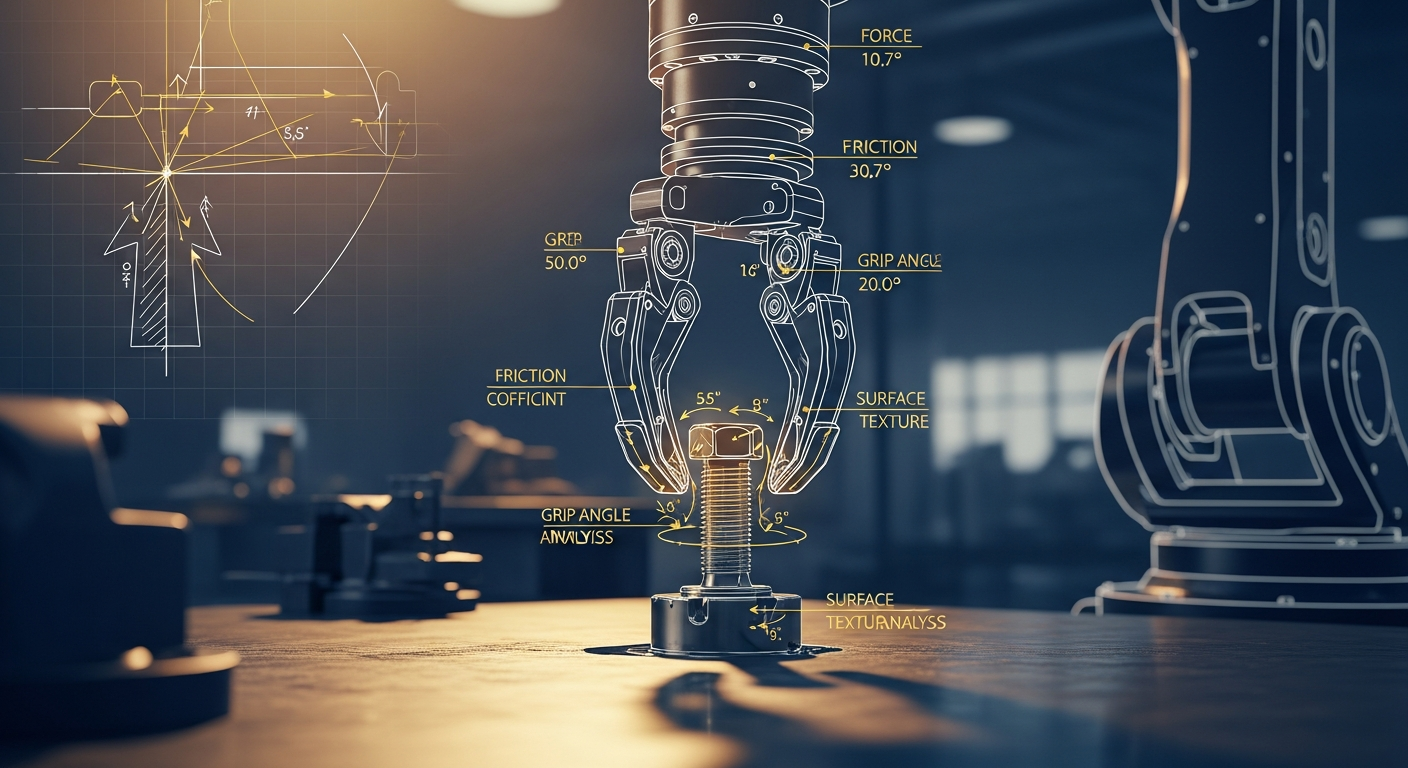
로봇은 왜 볼트를 떨어뜨리는가 — Physical AI가 공장에 필요한 진짜 이유
AI가 데이터 패턴만 외우는 시대는 끝나고 있다. 물리 법칙을 이해하는 Physical AI가 제조 현장에 왜 필요한지, KAIST 교수와 자동차 부품 공장 팀장이 볼트 하나를 놓고 이야기한다.

디지털 트윈, 당신 공장엔 이미 있다 — 엑셀과 MES 사이 어딘가에
디지털 트윈은 10억짜리 3D 시뮬레이션이 아니다. 지금 쓰고 있는 엑셀에 좋은 질문 하나를 더하는 것 — 두 전문가가 중소 제조기업이 이미 가진 데이터로 예측하는 공장을 만드는 현실적 로드맵을 제시한다.
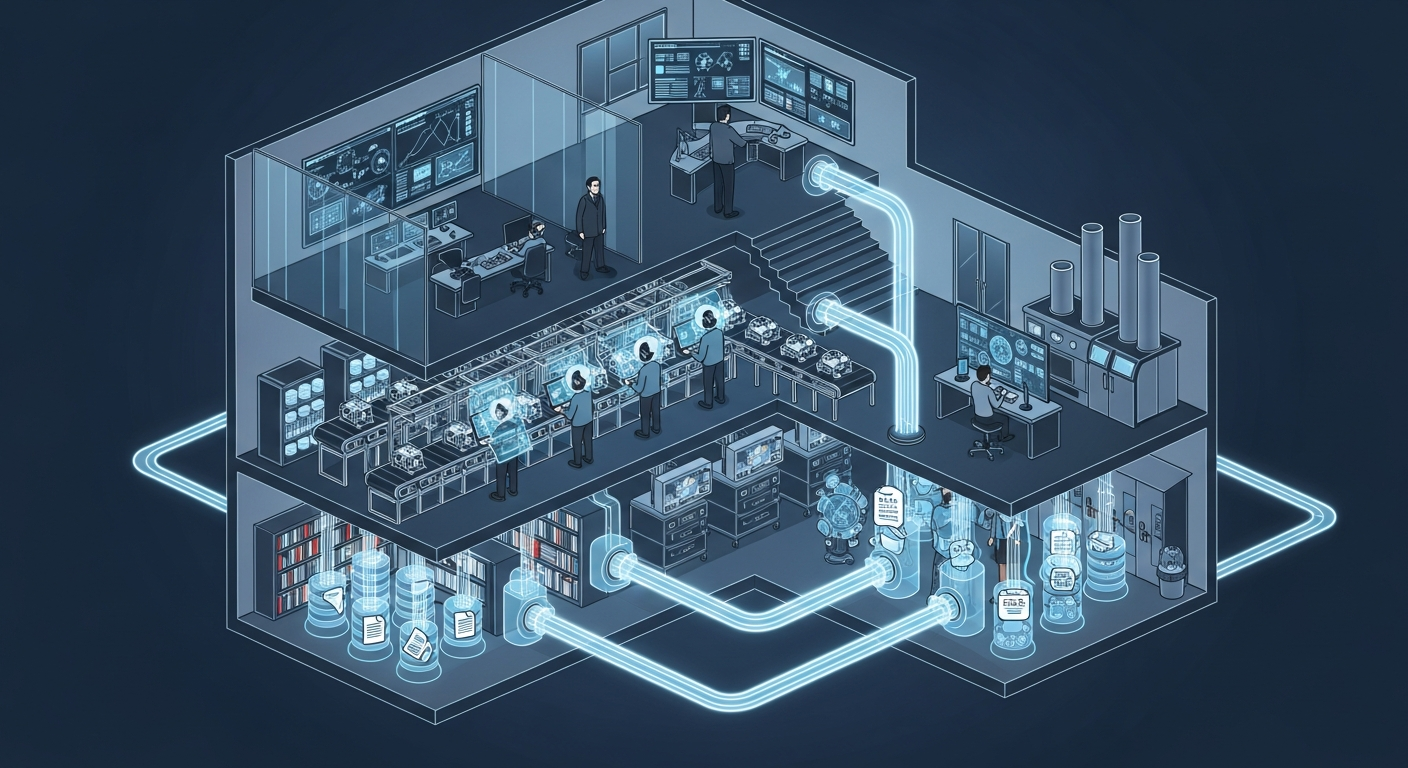
공장의 뇌는 어떻게 생겼는가 — 제조운영 AI 아키텍처 해부
지식관리, 업무자동화, 의사결정지원 — 따로 보면 다 있던 것들입니다. 제조 AI의 진짜 차이는 이 셋이 순환하면서 '우리 공장만의 지능'을 만든다는 데 있습니다.
Want to apply this in your factory?
MOAI helps manufacturing companies adopt AI tailored to their operations.
Talk to us →