Discovery (observation)
{{Short description|Act of detecting something new}} {{Redirect|Sightings}} {{Multiple issues| {{more citations needed|date=December 2011}} {{more footnotes|date=December 2011}} }} {{Use dmy dates|date=September 2016}}
'''Discovery''' is the act of detecting something new, or something previously unrecognized as meaningful. In the [[sciences]] and other [[Discipline (academia)|academic disciplines]], discovery is the [[observation]] of new [[Phenomenon|phenomena]], new actions, or new events and involves providing new reasoning to explain the knowledge gathered through such [[Observation|observations]], using [[knowledge]] previously acquired through abstract thought and from everyday experiences.
Some discoveries represent a radical breakthrough in knowledge or technology. Others are based on earlier discoveries, collaborations or ideas. In such cases, the process of discovery requires at least the awareness that an existing concept or method could be modified or transformed. New discoveries are made using various [[sense]]s, and are usually added to pre-existing [[knowledge]]. [[Question|Questioning]] plays a key role in discovery; discoveries are often made due to questions. Some discoveries lead to the [[invention]] of objects, processes, or techniques.
==Science== Within scientific disciplines, discovery is the observation of new [[phenomenon|phenomena]], actions, or events that help explain the knowledge gathered through previously acquired [[scientific evidence]]. Discovery is made by providing observational evidence and attempting to develop an initial, rough understanding of some phenomenon.
A 2026 book ''The Engine of Scientific Discovery'' studies hundreds of science’s biggest discoveries and argues that it is not just greater funding, teams or theories, but new methods and tools that bring about new discoveries. Many believe breakthroughs arise by chance or serendipity, but new microscopes, x-ray instruments and statistical methods can uncover hidden parts of the world that are out of reach without them.{{cite web|url=https://doi.org/10.1093/oso/9780197829790.001.0001|title=The Engine of Scientific Discovery: How new methods and tools spark major breakthroughs|author=Krauss, Alexander.|publisher=Oxford University Press|date=2026}}
Within the field of [[particle physics]], there is an accepted requirement for defining a discovery: a [[standard deviation#Table|five-sigma]] level of certainty. This level defines how [[statistic]]ally unlikely it is that an [[experiment]]al result is due to [[Randomness|chance]]. The combination of a five-sigma level of certainty and independent confirmation by other experiments turns findings into accepted discoveries.{{cite news| url= https://www.bbc.co.uk/news/science-environment-16116230 | title= Higgs boson: Excitement builds over 'glimpses' at LHC | date= 12 December 2011| work= [[BBC News]] | first= Paul |last= Rincon | access-date=2011-12-12}}
== Education == {{Original research section|date=December 2018}} Within the field of education, discovery occurs through observations. These observations are common and come in various forms. They can be observations of students done by the teacher or observations of teachers done by other professionals. Student observations help teachers identify where the students are developmentally and [[Cognitive development|cognitively]] in the course of their studies. Teacher observations are used by administrators to hold teachers accountable for staying on target with their goals, in terms of how they teach and how they treat students.
=== Observations of students completed by teachers === Teachers observe students throughout the day in the classroom. These observations can be informal or formal, and often involve the use of checklists, anecdotal notes, videos, interviews, written work, assessments, etc. By completing these observations, teachers can evaluate at what 'level' a student is understanding the lessons. Observations allow teachers to make necessary adaptations for the students in the classroom. These observations can also provide the foundation for strong relationships between teachers and students. When students have such relationships with teachers, they feel safer and more comfortable in the classroom and are more willing and eager to learn.{{Cite journal|last=Jablon|first=Judy|date=2009|title=Taking it all in: Observation in the classroom|url=https://www.isbe.net/Documents_KIDSWebsiteResources/Taking%20it%20all%20in.pdf|journal=Teaching Young Children|volume=4|pages=24–27}} Through observations, teachers identify the most developmentally appropriate practices to implement in their classrooms.{{Cn|date=October 2023}} These encourage and promote healthier learning styles and positive classroom atmospheres.
=== Observations of teachers completed by other professionals === With an educational system, government officials set different academic standards that teachers are expected to follow as a guideline for developmentally appropriate instruction. Teachers are also observed by administrators to ensure that classroom environments are positive. One of the tools used by teachers is the Classroom Assessment Scoring System (CLASS) tool. Informed by findings emerging from the use of this tool, "over 150 research studies prove that students in classrooms with high-CLASS scores have better academic and social outcomes."{{Cite book |url=https://trove.nla.gov.au/version/178336659|title=Classroom assessment scoring system (CLASS) manual, toddler|last1=La Paro|first1=Karen M|last2=Hamre|first2=Bridget K|last3=Pianta|first3=Robert C|date=2012|publisher=Baltimore Paul H. Brookes Publishing Co|isbn=9781598572599|language=en}}Teachstone. (2018). Exploring the promise of the Classroom Assessment Scoring System (CLASS). Retrieved from https://info.teachstone.com/ebook-what-is-class This tool focuses on encouraging positive classroom environments, regard for students' perspectives, behavior management skills, quality of feedback, and language modeling. Administrators rate each of ten categories on a scale of one to seven, one being the lowest score and seven being the highest score that a teacher may receive.
==Exploration== [[Western culture]] has used the term "discovery" in their histories to lay claims over lands and people as "discovery" through [[discovery doctrine]]s and subtly emphasize the importance of "[[exploration]]" in the history of the world,{{cite web|title=The racist language of space exploration|url=https://theoutline.com/post/5809/the-racist-language-of-space-exploration|website=The Outline|access-date=20 September 2019|date=14 August 2018|author=Caroline Haskins|language=en|archive-url=https://web.archive.org/web/20191016235916/https://theoutline.com/post/5809/the-racist-language-of-space-exploration|archive-date=16 October 2019|url-status=live}}{{cite web|title=When discussing Humanity's next move to space, the language we use matters.|url=https://blogs.scientificamerican.com/urban-scientist/when-discussing-humanity-8217-s-next-move-to-space-the-language-we-use-matters/|website=[[Scientific American]]|access-date=20 September 2019|date=26 March 2015|author=DNLee|language=en|archive-url=https://web.archive.org/web/20190914011756/https://blogs.scientificamerican.com/urban-scientist/when-discussing-humanity-8217-s-next-move-to-space-the-language-we-use-matters/|archive-date=14 September 2019|url-status=live}}{{cite web|date=2018-11-09|title=We need to change the way we talk about space exploration|first=Nadia|last=Drake|author-link=Nadia Drake|publisher=[[National Geographic]]|access-date=2019-10-19|url=https://www.nationalgeographic.com/science/2018/11/we-need-to-change-way-we-talk-about-space-exploration-mars/|archive-url=https://web.archive.org/web/20191016235826/https://www.nationalgeographic.com/science/2018/11/we-need-to-change-way-we-talk-about-space-exploration-mars/|archive-date=2019-10-16|url-status=dead}}{{cite journal |doi=10.1016/0265-9646(95)93233-B |title=Development and imperialism in space |author=Alan Marshall |date=February 1995 |journal=Space Policy |volume=11 |issue=1 |pages=41–52 |bibcode=1995SpPol..11...41M |access-date=2020-06-28 |url=https://www.researchgate.net/publication/222641231}} such as in the "[[Age of Discovery]]", the [[New World]] and any [[Frontier thesis|frontierist]] endeavour even into space as the "[[New Frontier]]". In the course of this discovery, it has been used to describe the first incursions of peoples from one culture into the geographical and cultural environment of others. However, calling it "discovery" has been rejected by many [[indigenous peoples]], from whose perspective it was not a discovery but a [[first contact (anthropology)|first contact]], and consider the term "discovery" to perpetuate [[colonialism]], as for the discovery doctrineFrichner, Tonya Gonnella. (2010). [https://undocs.org/E/C.19/2010/13 “Preliminary Study of the Impact on Indigenous Peoples of the International Legal Construct Known as the Doctrine of Discovery.”] E/C.19/2010/13. Presented at the Permanent Forum on Indigenous Issues, Ninth Session, United Nations Economic and Social Council, New York, 27 Apr 2010. and frontierist concepts like ''[[terra nullius]]''.
Discovery and the age of discovery have been alternatively, particularly regionally, referred to through the terms contact, ''Age of Contact''{{cite web|url=https://texasourtexas.texaspbs.org/the-eras-of-texas/age-of-contact/|author=Katie Whitehurst|publisher=[[PBS]]|title=Age of Contact|access-date=9 January 2021}} or ''Contact Period''.{{cite book|chapter-url=https://doi.org/10.1007/978-1-4419-0465-2_1641|date=2014|publisher=Springer|location=New York, NY|first=Michael Shakir|last=Nassaney|chapter=North America During the European Contact Period |editor=Claire Smith|title=Encyclopedia of Global Archaeology| pages=5350–5371 | doi=10.1007/978-1-4419-0465-2_1641 | isbn=978-1-4419-0426-3 |access-date=9 January 2021}}
==See also==
{{div col}}
- [[Bold hypothesis]]
- [[:Category:Discoverers]]
- [[:Category:Lists of inventions or discoveries]]
- [[Creativity techniques]]
- [[Contact zone]]
- [[List of German inventions and discoveries]]
- [[List of multiple discoveries]]
- [[Multiple discovery]]
- [[Revelation]]
- [[Rights of nature]]
- [[Role of chance in scientific discoveries]]
- [[Scientific priority]]
- [[Serendipity]]
- [[Timeline of scientific discoveries]]
- {{ill|USSR state registry of discoveries|ru|Государственный реестр открытий СССР}} {{div col end}}
==References== {{Reflist}}
==Sources==
- {{cite journal|author=B Barber |title=Resistance by scientists to scientific discovery |journal=Science |volume=134 |issue=3479 |pages=596–602 |date=1 September 1961 |doi=10.1126/science.134.3479.596|pmid=13686762 |bibcode=1961Sci...134..596B }}
- {{Cite journal |doi=10.2307/2089193 |issn=0003-1224 |volume=22 |issue=6 |pages=635–659 |last=Merton |first=Robert K. |title=Priorities in scientific discovery: a chapter in the sociology of science |journal=[[American Sociological Review]] |date=December 1957 |jstor=2089193 |s2cid=147253305 |url=http://pdfs.semanticscholar.org/4faf/0abe21a4de23629c5df7951b5233f0ad1ef0.pdf |archive-url=https://web.archive.org/web/20210113162824/http://pdfs.semanticscholar.org/4faf/0abe21a4de23629c5df7951b5233f0ad1ef0.pdf |url-status=dead |archive-date=2021-01-13 }}
- {{cite journal|author=Carnegie Mellon University Artificial Intelligence and Psychology Project|author2=Yulin Qin|author3=Herbert A Simon |title=Laboratory replication of scientific discovery processes |journal=[[Cognitive Science]] |volume=14 |issue=2 |pages=281–312 |year=1990 |oclc=832091458 |doi=10.1016/0364-0213(90)90005-H |doi-access=free }} ([https://web.archive.org/web/20160304052116/http://oai.dtic.mil/oai/oai?&verb=getRecord&metadataPrefix=html&identifier=ADA219273 preprint])
- {{cite journal |author1=A Silberschatz |author2=A Tuzhilin|author2-link= Alexander Tuzhilin |title=What makes patterns interesting in knowledge discovery systems |journal=IEEE Transactions on Knowledge and Data Engineering |volume=8 |issue=6 |date=December 1996 |pages=970–974 |doi=10.1109/69.553165 |citeseerx=10.1.1.127.8150 |s2cid=11430349 }}
- {{cite journal |author=Tomasz Imielinski |author-link=Tomasz Imielinski |author2=Heikki Mannila|author2-link=Heikki Mannila |title=A database perspective on knowledge discovery |journal=Communications of the ACM |volume=39 |issue=11 |pages=58–64 |date=November 1996 |doi=10.1145/240455.240472 |s2cid=7530194 |doi-access=free }}
==External links==
- [https://www.pbs.org/wgbh/aso/databank/bioindex.html A Science Odyssey: People and discoveries] from [[PBS]].
- [https://www.youtube.com/user/TEDEducation?feature=watch TED-Education video] - [https://www.youtube.com/watch?v=F8UFGu2M2gM&feature=relmfu How simple ideas lead to scientific discoveries].
- [http://www.infoplease.com/ipa/A0004637.html A Guide to Inventions and Discoveries: From Adrenaline to the Zipper] from [[Infoplease]].
{{Portal bar|Science}} {{Authority control}} [[Category:Learning]] [[Category:Observation]] [[Category:Cognition]] [[Category:Discoveries| ]]
From MOAI Insights
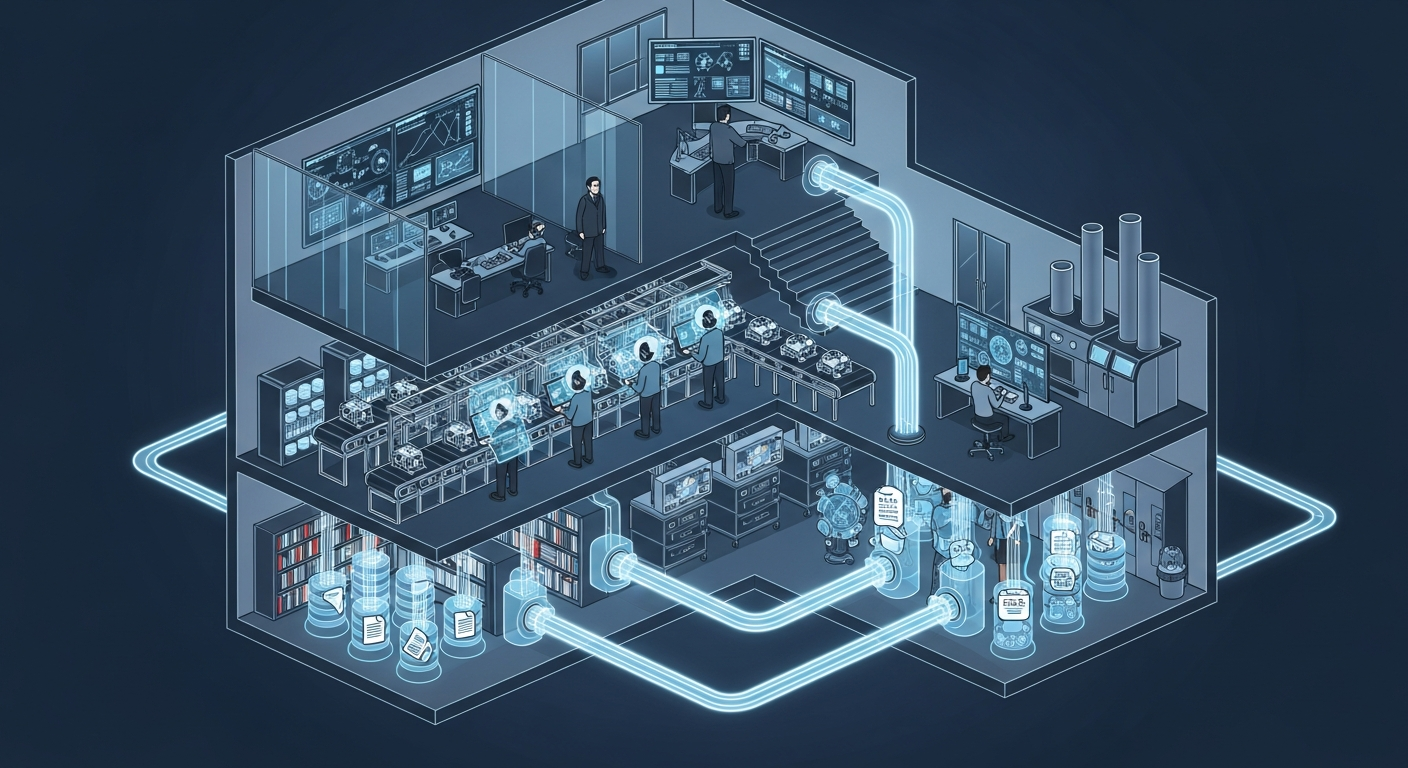
공장의 뇌는 어떻게 생겼는가 — 제조운영 AI 아키텍처 해부
지식관리, 업무자동화, 의사결정지원 — 따로 보면 다 있던 것들입니다. 제조 AI의 진짜 차이는 이 셋이 순환하면서 '우리 공장만의 지능'을 만든다는 데 있습니다.
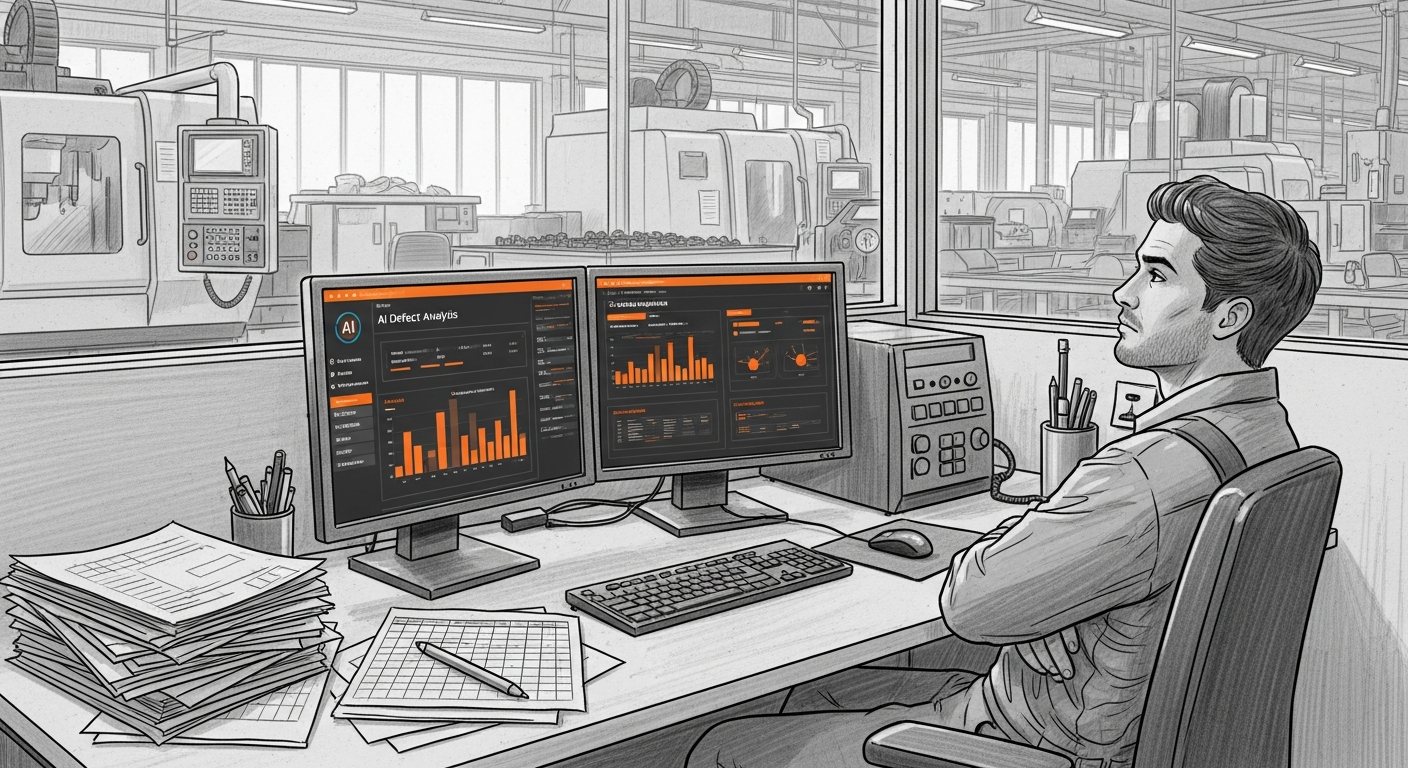
그 30분을 18년 동안 매일 반복했습니다 — 품질팀장이 본 AI Agent
18년차 품질팀장이 매일 아침 30분씩 반복하던 데이터 분석을 AI Agent가 3분 만에 해냈습니다. 챗봇과는 완전히 다른 물건 — 직접 시스템에 접근해서 데이터를 꺼내고 분석하는 AI의 현장 도입기.
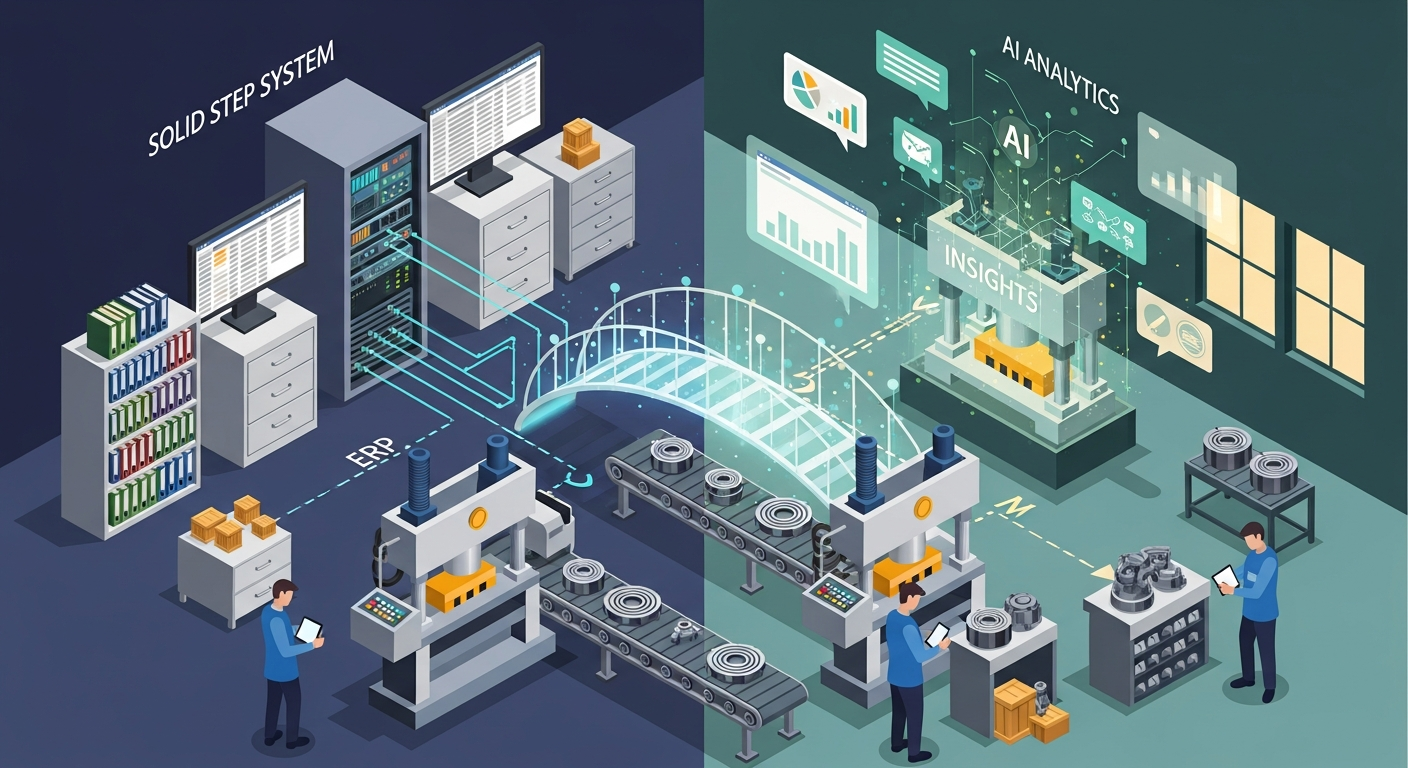
ERP 20년, 나는 왜 AI를 얹기로 했나
ERP 20년차 제조IT본부장의 고백: 3,200만 행의 데이터가 잠들어 있었다. ERP를 바꾸지 않고 AI를 얹자, 일주일 걸리던 불량 분석이 수 초로 줄었다.
Want to apply this in your factory?
MOAI helps manufacturing companies adopt AI tailored to their operations.
Talk to us →