Leo Breiman
{{Short description|American statistician}} {{no footnotes|date=February 2013}} {{Infobox scientist | name = Leo Breiman | image = Leo_Breiman.jpg | image_size = 200px | caption = Breiman in 2003 | birth_date = {{Birth date|1928|1|27}} | birth_place = [[New York City]], U.S. | death_date = {{Death date and age|2005|7|5|1928|1|27}} | death_place = [[Berkeley, California]], U.S. | field = [[Statistics]] | work_institutions = [[University of California, Berkeley]] | alma_mater = [[University of California, Berkeley]] | doctoral_advisor = [[Michel Loève]] | doctoral_students = [[Adele Cutler]][[Sam Buttrey]] | thesis_title = Homogeneous Processes | thesis_year = 1954 | thesis_url = http://oskicat.berkeley.edu/record=b12056407~S1 | known_for = [[Classification and regression tree|CART]], [[Bootstrap aggregating|Bagging]], [[Random forest]] | influences = | influenced = | prizes = | footnotes = }}
'''Leo Breiman''' (January 27, 1928 – July 5, 2005) was an American [[statistician]] at the [[University of California, Berkeley]] and a member of the [[United States National Academy of Sciences]].
Breiman's work helped to bridge the gap between statistics and [[computer science]], particularly in the field of [[machine learning]]. His most important contributions were his work on [[decision tree learning|classification and regression trees]] and ensembles of trees fit to [[bootstrap (statistics)|bootstrap]] samples. [[Bootstrap aggregating|Bootstrap aggregation]] was given the name [[bootstrap aggregating|''bagging'']] by Breiman. Another of Breiman's ensemble approaches is the [[random forest]].
== See also ==
- [[Shannon–McMillan–Breiman theorem]]
== Further reading ==
- Leo Breiman [http://www.berkeley.edu/news/media/releases/2005/07/07_breiman.shtml obituary], from the University of California, Berkeley
- [[Richard A. Olshen]] "[https://projecteuclid.org/journals/statistical-science/volume-16/issue-2/A-Conversaton-with-Leo-Breiman/10.1214/ss/1009213290.full A Conversation with Leo Breiman]," Statistical Science Volume 16, Issue 2, 2001 *{{Cite journal | last1 = Breiman | first1 = L. | title = Statistical Modeling: the Two Cultures | doi = 10.1214/ss/1009213725 | jstor = 2676681 | journal = Statistical Science | volume = 16 | issue = 3 | pages = 199–215 | year = 2001 | doi-access = }}
== External links == *{{MathGenealogy |id=32157}} *[http://www.york.ac.uk/depts/maths/histstat/people/breiman.gif Leo Breiman] from [http://www.york.ac.uk/depts/maths/histstat/people/welcome.htm PORTRAITS OF STATISTICIANS] *[http://videolectures.net/ecml03_breiman_teapb/ A video record] of a Leo Breiman's lecture about one of his machine learning techniques
{{Authority control}}
{{DEFAULTSORT:Breiman, Leo}} [[Category:1928 births]] [[Category:2005 deaths]] [[Category:20th-century American statisticians]] [[Category:Fellows of the American Statistical Association]] [[Category:Machine learning researchers]] [[Category:Members of the United States National Academy of Sciences]] [[Category:University of California, Berkeley College of Letters and Science faculty]] [[Category:Computational statisticians]]
{{US-statistician-stub}}
From MOAI Insights
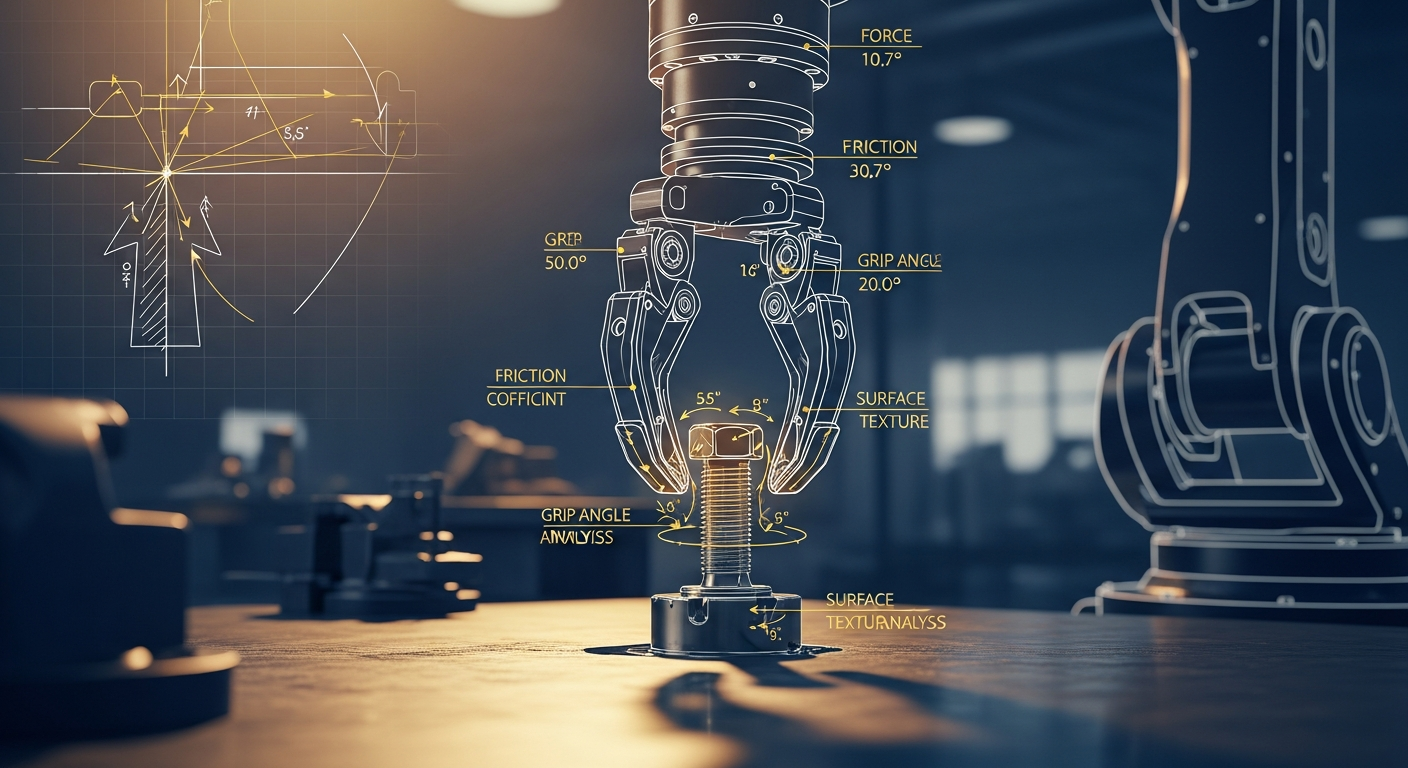
로봇은 왜 볼트를 떨어뜨리는가 — Physical AI가 공장에 필요한 진짜 이유
AI가 데이터 패턴만 외우는 시대는 끝나고 있다. 물리 법칙을 이해하는 Physical AI가 제조 현장에 왜 필요한지, KAIST 교수와 자동차 부품 공장 팀장이 볼트 하나를 놓고 이야기한다.

디지털 트윈, 당신 공장엔 이미 있다 — 엑셀과 MES 사이 어딘가에
디지털 트윈은 10억짜리 3D 시뮬레이션이 아니다. 지금 쓰고 있는 엑셀에 좋은 질문 하나를 더하는 것 — 두 전문가가 중소 제조기업이 이미 가진 데이터로 예측하는 공장을 만드는 현실적 로드맵을 제시한다.
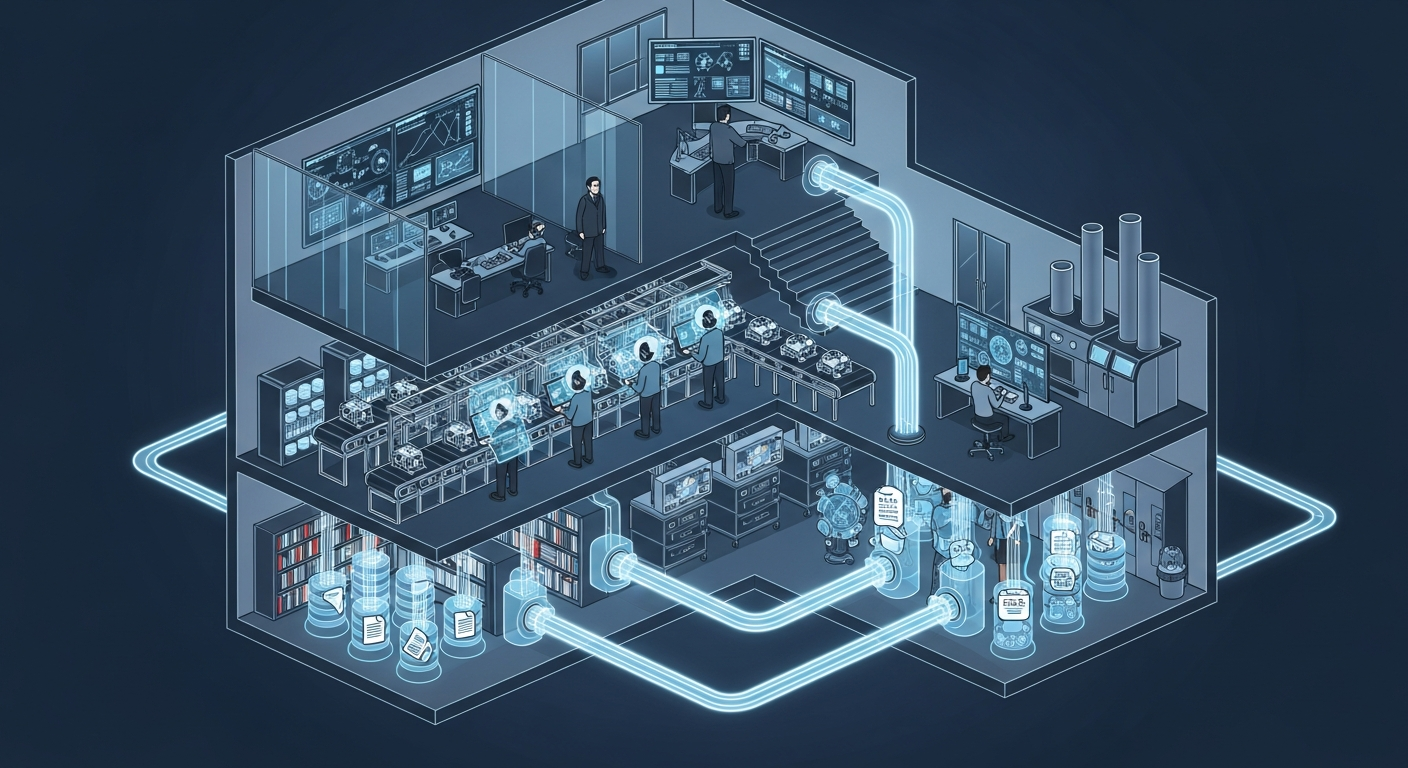
공장의 뇌는 어떻게 생겼는가 — 제조운영 AI 아키텍처 해부
지식관리, 업무자동화, 의사결정지원 — 따로 보면 다 있던 것들입니다. 제조 AI의 진짜 차이는 이 셋이 순환하면서 '우리 공장만의 지능'을 만든다는 데 있습니다.
Want to apply this in your factory?
MOAI helps manufacturing companies adopt AI tailored to their operations.
Talk to us →