Line chart
{{Short description|Type of chart}}{{For|the mathematical concept|Line graph}}
[[File:Pushkin population history.svg|thumb|Line chart showing the population of the town of [[Pushkin, Saint Petersburg]] from 1800 to 2010, measured at various intervals]]
A '''line chart''' or '''line graph''', also known as '''curve chart''',{{Cite book|title=Charting Statistics|last=Spear|first=Mary Eleanor|publisher=McGraw-Hill|year=1952|location=New York|pages=41|oclc=166502}} is a type of [[chart]] that displays information as a series of data points called 'markers' connected by straight [[wikt:line|line]] segments.Burton G. Andreas (1965). ''Experimental psychology''. p.186 It is a basic type of chart common in many fields. It is similar to a [[scatter plot]] except that the measurement points are ordered (typically by their x-axis value) and joined with straight line segments. A line chart is often used to visualize a trend in data over intervals of time – a [[time series]] – thus the line is often drawn chronologically. In these cases they are known as [[run chart]]s.
==History== Some of the earliest known line charts are generally credited to [[Francis Hauksbee]], [[Nicolaus Samuel Cruquius]], [[Johann Heinrich Lambert]] and the Scottish engineer [[William Playfair]].[[Michael Friendly]] (2008). [http://www.math.yorku.ca/SCS/Gallery/milestone/milestone.pdf "Milestones in the history of thematic cartography, statistical graphics, and data visualization"]. pp 13–14. Retrieved 7 July 2008. Line charts often display time as a variable on the x-axis. Playfair was one of the first to visualize data this way. In 1786, he plotted ten years of money spent by the Royal Navy. He supplemented the chart with a detailed description, telling his readers how to interpret the change over time because they were unfamiliar with this form of abstract visualization. In addition to line charts, Playfair invented and popularized bar charts and pie charts.{{Cite news |last=Fry |first=Hannah |date=2021-06-14 |title=When Graphs Are a Matter of Life and Death |url=https://www.newyorker.com/magazine/2021/06/21/when-graphs-are-a-matter-of-life-and-death |access-date=2024-11-11 |work=The New Yorker |language=en-US |issn=0028-792X}}
== Example == In the experimental sciences, data collected from experiments are often visualized by a graph. For example, if one collects data on the speed of an object at certain points in time, one can visualize the data in a [[data table]] such as the following: [[Image:ScientificGraphSpeedVsTime.svg|thumb|300px|Graph of speed versus time]] {| class="wikitable" ! Elapsed Time (s) ! Speed (m s−1) |- | 0 | 0 |- | 1 | 3 |- | 2 | 7 |- | 3 | 12 |- | 4 | 18 |- | 5 | 30 |- | 6 | 45.6 |}
Such a table representation of data is a great way to display exact values, but it can prevent the discovery and understanding of patterns in the values. In addition, a table display is often erroneously considered to be an objective, neutral collection or storage of the data (and may in that sense even be erroneously considered to be the data itself) whereas it is in fact just one of various possible visualizations of the data.
Understanding the process described by the data in the table is aided by producing a graph or line chart of ''speed versus time''. Such a visualisation appears in the figure to the right. This visualization can let the viewer quickly understand the entire process at a glance.
This visualization can however be misunderstood, especially when expressed as showing the mathematical function v(t) that expresses the speed v (the dependent variable) as a function of time t. This can be misunderstood as showing speed to be a variable that is dependent only on time. This would however only be true in the case of an object being acted on only by a constant force acting in a vacuum.
== Best-fit == [[File:Okuns law quarterly differences.svg|thumb|right|upright=0.8|A best-fit line chart ([[simple linear regression]])]] [[File:Dwiggins graph.jpg|thumb|right|upright=0.8|A parody line graph (1919) by [[William Addison Dwiggins]].]] Charts often include an overlaid mathematical function depicting the [[Curve fitting|best-fit]] trend of the scattered data. This layer is referred to as a best-fit layer and the graph containing this layer is often referred to as a line graph.
It is simple to construct a "best-fit" layer consisting of a set of line segments connecting adjacent data points; however, such a "best-fit" is usually not an ideal representation of the trend of the underlying scatter data for the following reasons:
It is highly improbable that the discontinuities in the slope of the best-fit would correspond exactly with the positions of the measurement values.
It is highly unlikely that the experimental error in the data is negligible, yet the curve falls exactly through each of the data points.
In either case, the best-fit layer can reveal trends in the data. Further, measurements such as the [[gradient]] or the area under the curve can be made visually, leading to more conclusions or results from the data table.
A true best-fit layer should depict a continuous mathematical function whose parameters are determined by using a suitable error-minimization scheme, which appropriately weights the error in the data values. Such [[curve fitting]] functionality is often found in [[List of information graphics software|graphing software]] or [[spreadsheet]]s. Best-fit curves may vary from simple [[linear equation]]s to more complex quadratic, polynomial, exponential, and periodic curves.{{cite web|last=Elert|first=Glenn|title=Curve fitting|url=https://physics.info/curve-fitting/|work=The Physics Hypertextbook|date=2023}}
==See also==
- [[Curve fitting]]
- [[Data and information visualization]]
- [[List of information graphics software]]
- [[Run chart]]
- [[Chartjunk]]
==References== {{Commons category|Line charts}} {{Reflist}}
{{Authority control}}
[[Category:Quality control tools]] [[Category:Statistical charts and diagrams]] [[Category:Financial charts]]
From MOAI Insights
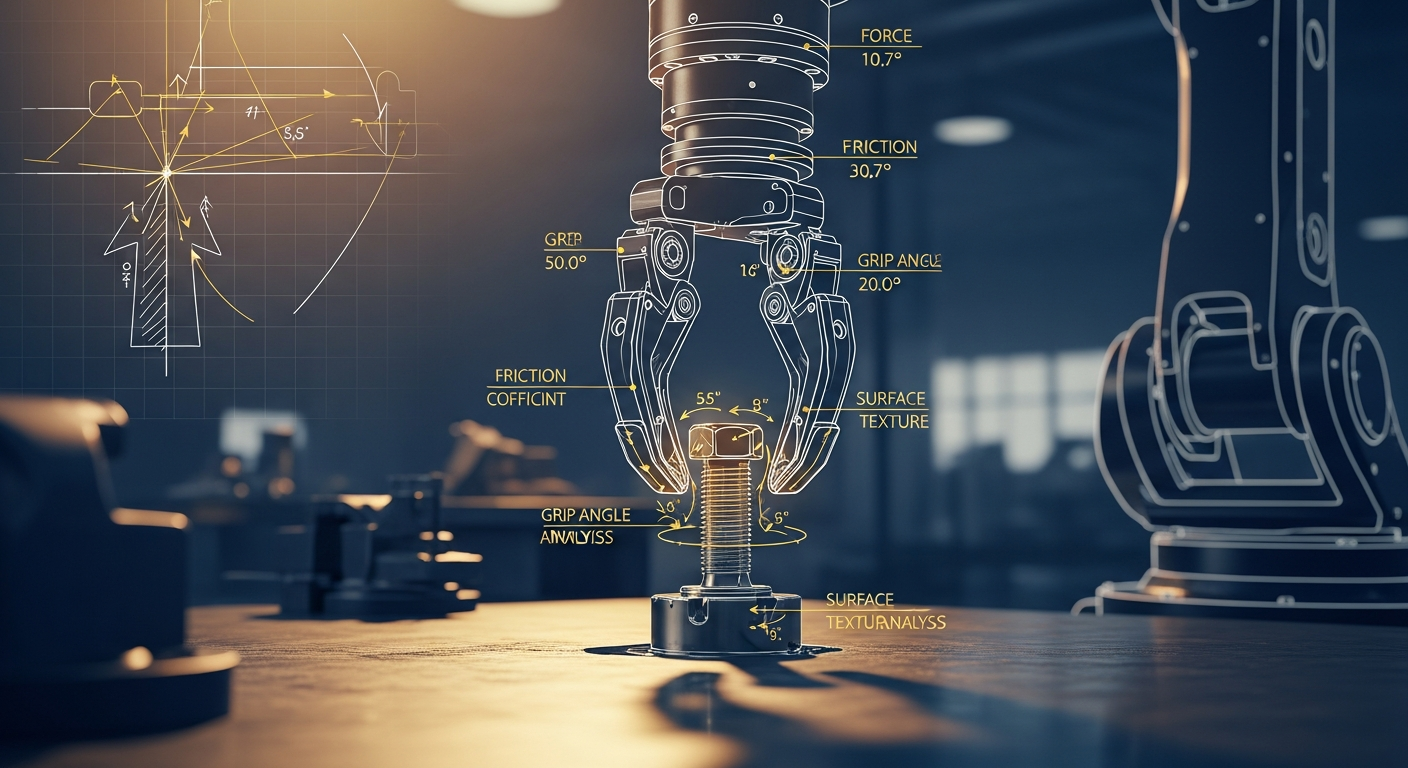
로봇은 왜 볼트를 떨어뜨리는가 — Physical AI가 공장에 필요한 진짜 이유
AI가 데이터 패턴만 외우는 시대는 끝나고 있다. 물리 법칙을 이해하는 Physical AI가 제조 현장에 왜 필요한지, KAIST 교수와 자동차 부품 공장 팀장이 볼트 하나를 놓고 이야기한다.

디지털 트윈, 당신 공장엔 이미 있다 — 엑셀과 MES 사이 어딘가에
디지털 트윈은 10억짜리 3D 시뮬레이션이 아니다. 지금 쓰고 있는 엑셀에 좋은 질문 하나를 더하는 것 — 두 전문가가 중소 제조기업이 이미 가진 데이터로 예측하는 공장을 만드는 현실적 로드맵을 제시한다.

공장의 뇌는 어떻게 생겼는가 — 제조운영 AI 아키텍처 해부
지식관리, 업무자동화, 의사결정지원 — 따로 보면 다 있던 것들입니다. 제조 AI의 진짜 차이는 이 셋이 순환하면서 '우리 공장만의 지능'을 만든다는 데 있습니다.
Want to apply this in your factory?
MOAI helps manufacturing companies adopt AI tailored to their operations.
Talk to us →