Operational artificial intelligence
{{Short description|AI focused on real-world operational deployment}} '''Operational artificial intelligence''', or '''operational AI''', is a type of intelligent system designed for real-world applications, particularly at commercial scale. The term is used to distinguish accessible [[artificially intelligent]] (AI) systems from [[fundamental research|fundamental]] AI research and from [[industrial AI]] applications, which are not integrated with the routine usage of a business. The definition of operational AI differs throughout the IT [[Industry (economics)|industry]], where vendors and individual organizations often create their own custom definitions of such processes and services for the purpose of marketing their own products.
Applications include [[text analytics]], advanced analytics, [[facial recognition system|facial]] and [[image recognition]], machine learning, and [[natural language generation]].{{cite web |last1=Barnett |first1=Gordon |title=The insurance industry is a prime target for AI technologies and solutions |url=https://www.zdnet.com/article/the-insurance-industry-is-a-prime-target-for-ai-technologies-and-solutions/ |website=ZDNet |publisher=Forester Research |accessdate=28 March 2018}}
==Definitions== According to a white paper by software company Tupl Inc, continuous machine learning model training and results extraction in the telecom industry requires a large number of automation utilities to "facilitate the development and deployment of a multitude of use cases, the collection and correlation of the data, the creation and training of the models, and the operation at telecom-grade levels of security and availability".{{cite web|last1=Tapia|last2=Palacios|last3=Noël|last4=Hautakangas|first1=Pablo|first2=Enrique|first3=Laurent|first4=Petri|title=Implementing Operational AI in Telecom Environments|url=https://www.tupl.com/wp-content/uploads/2018/02/tupl-white-paper-operational-ai.pdf|website=tupl.com|publisher=Tupl, inc.|accessdate=12 October 2018|archive-date=12 October 2018|archive-url=https://web.archive.org/web/20181012221534/https://www.tupl.com/wp-content/uploads/2018/02/tupl-white-paper-operational-ai.pdf|url-status=dead}} [[File:Operational ai telecom.png|thumb|Operational AI key components for telecom industry. Authors: Pablo Tapia, Enrique Palacios, Laurent Noël, Petri Hautakangas of Tupl Inc.]]
Researchers in the [[University of Waterloo]]'s Artificial Intelligence Group describe operational AI in terms of the focus on [[Applications of artificial intelligence|applications]] that bring value to products and the company.{{cite web |title=Operational Artificial Intelligence |url=https://uwaterloo.ca/operational-artificial-intelligence-research/ |website=University of Waterloo |date=30 January 2018 |accessdate=9 October 2018}}{{cite web |last1=Han |first1=Meghan |title=New Institute for Applied AI Opens in Waterloo |url=https://medium.com/syncedreview/new-institute-for-applied-ai-opens-in-waterloo-afc35992cbf8 |website=medium.com |publisher=Synced Review |accessdate=9 October 2018}} University of Waterloo Professor of Electrical and Computer Engineering Fakhri Karray describes operational AI as "application of AI for the masses".{{cite web |last1=Caldwell |first1=Brian |title=AI with a Difference |date=5 December 2011 |url=https://engineerthefuture.ca/ai-with-a-difference/ |publisher=University of Waterloo |accessdate=31 August 2017}} Canada Research Chair and Associate Professor [[Alexander Wong (professor)]] describes operational AI as AI for "anyone, anywhere, anytime." [[File:Operational wong.png|thumb|Diagram of components of operational AI. Frame from "Operational Artificial Intelligence: Anytime, Anywhere, Anyone", talk by Professor Alexander Wong, 12-12-2017, uploaded to CENTRA community.]]
==Related terms== [[Industrial AI]] refers to intelligent systems applied for business at any scale and for any use case.
==See also== *[[Applications of artificial intelligence]] *[[Edge computing]] *[[Industrial artificial intelligence]] *[[Continuous integration]]
==References== {{Reflist}}
[[Category:Artificial intelligence]]
From MOAI Insights
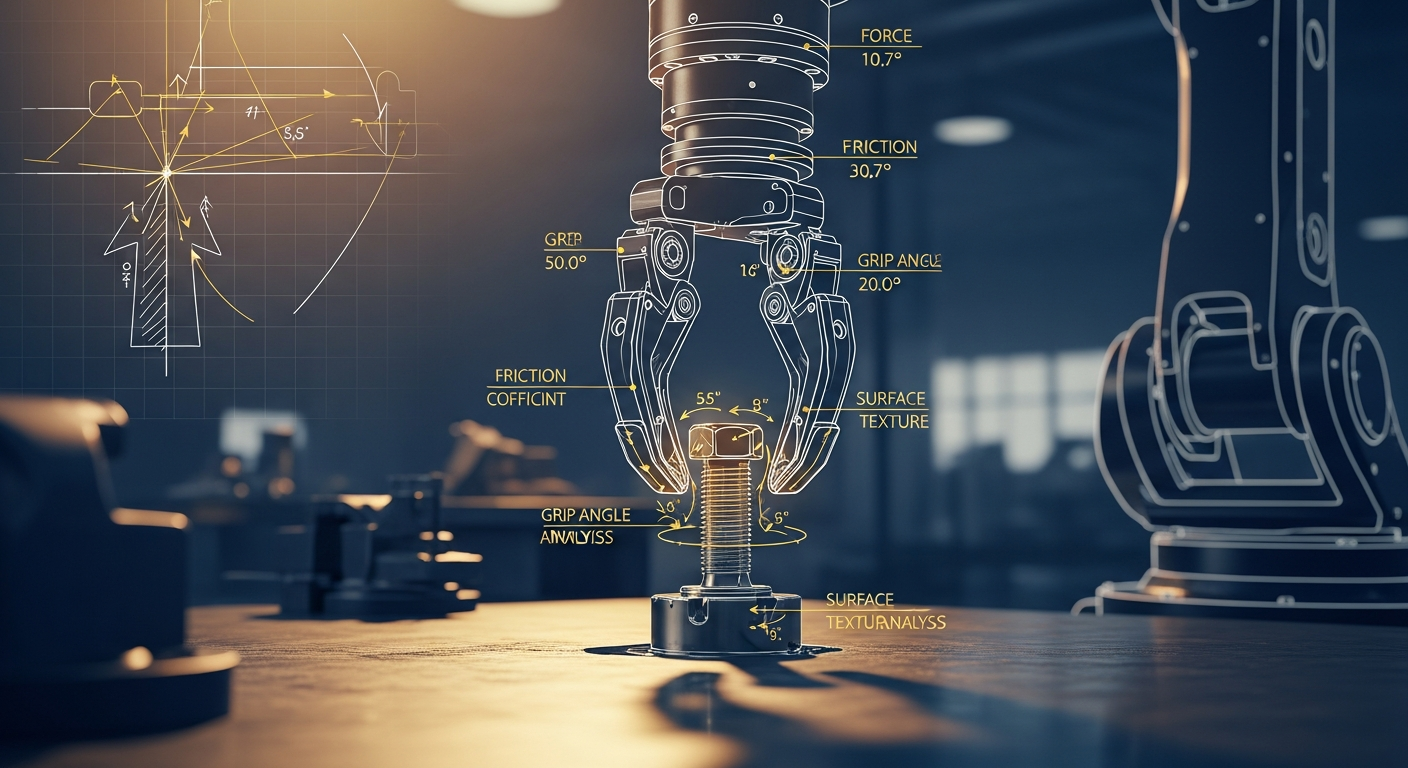
로봇은 왜 볼트를 떨어뜨리는가 — Physical AI가 공장에 필요한 진짜 이유
AI가 데이터 패턴만 외우는 시대는 끝나고 있다. 물리 법칙을 이해하는 Physical AI가 제조 현장에 왜 필요한지, KAIST 교수와 자동차 부품 공장 팀장이 볼트 하나를 놓고 이야기한다.

디지털 트윈, 당신 공장엔 이미 있다 — 엑셀과 MES 사이 어딘가에
디지털 트윈은 10억짜리 3D 시뮬레이션이 아니다. 지금 쓰고 있는 엑셀에 좋은 질문 하나를 더하는 것 — 두 전문가가 중소 제조기업이 이미 가진 데이터로 예측하는 공장을 만드는 현실적 로드맵을 제시한다.
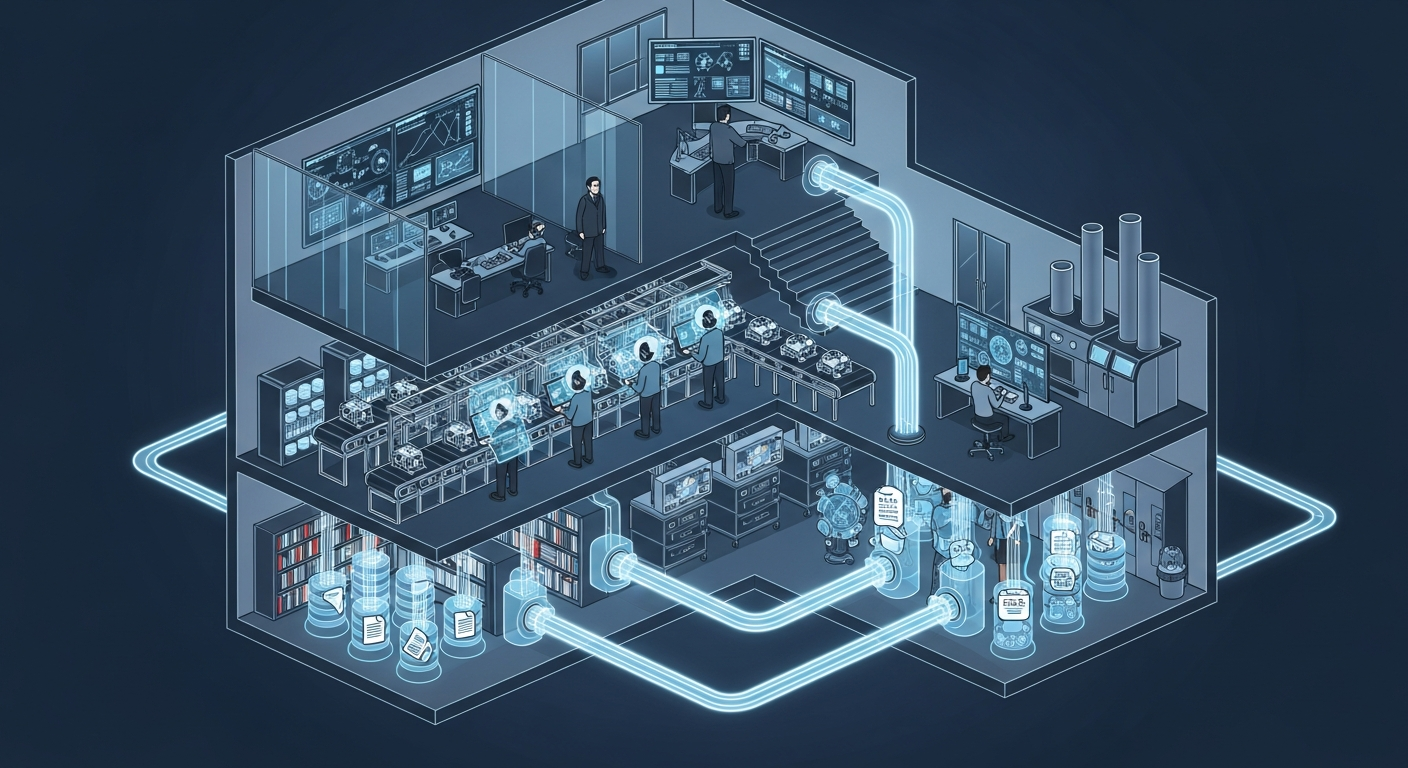
공장의 뇌는 어떻게 생겼는가 — 제조운영 AI 아키텍처 해부
지식관리, 업무자동화, 의사결정지원 — 따로 보면 다 있던 것들입니다. 제조 AI의 진짜 차이는 이 셋이 순환하면서 '우리 공장만의 지능'을 만든다는 데 있습니다.
Want to apply this in your factory?
MOAI helps manufacturing companies adopt AI tailored to their operations.
Talk to us →