Probably approximately correct learning
{{short description|Framework for mathematical analysis of machine learning}} {{Machine learning|Theory}} In [[computational learning theory]], '''probably approximately correct''' ('''PAC''') '''learning''' is a framework for mathematical analysis of [[machine learning]]. It was proposed in 1984 by [[Leslie Valiant]].L. Valiant. ''[http://web.mit.edu/6.435/www/Valiant84.pdf A theory of the learnable.]'' Communications of the ACM, 27, 1984.
In this framework, the learner receives samples and must select a generalization function (called the ''hypothesis'') from a certain class of possible functions. The goal is that, with high probability (the "probably" part), the selected function will have low [[generalization error]] (the "approximately correct" part). The learner must be able to learn the concept given any arbitrary approximation ratio, probability of success, or [[Empirical distribution function|distribution of the samples]].
The model was later extended to treat noise (misclassified samples).
An important innovation of the PAC framework is the introduction of [[computational complexity theory]] concepts to machine learning. In particular, the learner is expected to find efficient functions (time and space requirements bounded to a [[polynomial]] of the example size), and the learner itself must implement an efficient procedure (requiring an example count bounded to a polynomial of the concept size, modified by the approximation and [[likelihood]] bounds).
== Definitions and terminology == In order to give the definition for something that is PAC-learnable, we first have to introduce some terminology.Kearns and Vazirani, pg. 1-12,
For the following definitions, two examples will be used. The first is the problem of [[character recognition]] given an array of n bits encoding a binary-valued image. The other example is the problem of finding an interval that will correctly classify points within the interval as positive and the points outside of the range as negative.
Let X be a set called the ''instance space'' or the encoding of all the samples. In the character recognition problem, the instance space is X={0,1}^n. In the interval problem the instance space, X, is the set of all bounded intervals in \mathbb{R}, where \mathbb{R} denotes the set of all [[real numbers]].
A ''concept'' is a subset c \subset X. One concept is the set of all patterns of bits in X={0,1}^n that encode a picture of the letter "P". An example concept from the second example is the set of open intervals, { (a,b) \mid 0 \leq a \leq \pi/2, \pi \leq b \leq \sqrt{13} }, each of which contains only the positive points. A ''[[concept class]]'' C is a collection of concepts over X. This could be the set of all subsets of the array of bits that are [[Morphological skeleton|skeletonized]] [[Pixel connectivity#4-connected|4-connected]] (width of the font is 1).
Let \operatorname{EX}(c, D) be a procedure that draws an example, x, using a probability distribution D and gives the correct label c(x), that is 1 if x \in c and 0 otherwise.
Now, given 0<\epsilon,\delta<1 , assume there is an algorithm A and a polynomial p in 1/\epsilon, 1/\delta (and other relevant parameters of the class C) such that, given a sample of size p drawn according to \operatorname{EX}(c, D), then, with probability of at least 1-\delta, A outputs a hypothesis h \in C that has an average error less than or equal to \epsilon on X with the same distribution D. Further if the above statement for algorithm A is true for every concept c \in C and for every distribution D over X, and for all 0<\epsilon, \delta<1 then C is (efficiently) '''PAC learnable''' (or ''distribution-free PAC learnable''). We can also say that A is a '''PAC learning algorithm''' for C.
== Equivalence == Under some regularity conditions these conditions are equivalent: {{cite journal |last1=Blumer |first1=Anselm |last2=Ehrenfeucht |first2=Andrzej |last3=David |first3=Haussler |last4=Manfred |first4=Warmuth |s2cid=1138467 |title=Learnability and the Vapnik-Chervonenkis Dimension |journal=Journal of the Association for Computing Machinery |date=October 1989 |volume=36 |issue=4 |pages=929–965 |doi=10.1145/76359.76371 |doi-access=free }}
The concept class ''C'' is PAC learnable.
The [[VC dimension]] of ''C'' is finite.
''C'' is a uniformly [[Glivenko–Cantelli theorem#Glivenko–Cantelli class|Glivenko-Cantelli class]].{{clarify|date=March 2018}}
''C'' is [[compressible (Littlestone and Warmuth)|compressible]] in the sense of Littlestone and Warmuth
== See also ==
- [[Data mining]]
- [[Error tolerance (PAC learning)]]
- [[Occam learning]]
- [[Sample complexity]]
== References ==
== Further reading ==
- M. Kearns, U. Vazirani. ''[https://books.google.com/books?id=vCA01wY6iywC An Introduction to Computational Learning Theory].'' MIT Press, 1994. A textbook.
- M. Mohri, A. Rostamizadeh, and A. Talwalkar. ''Foundations of Machine Learning''. MIT Press, 2018. Chapter 2 contains a detailed treatment of PAC-learnability. [https://mitpress.ublish.com/ebook/foundations-of-machine-learning--2-preview/7093/9 Readable through open access from the publisher.]
- D. Haussler. [http://www.cs.iastate.edu/~honavar/pac.pdf Overview of the Probably Approximately Correct (PAC) Learning Framework]. An introduction to the topic.
- L. Valiant. [https://web.archive.org/web/20170228150047/http://www.probablyapproximatelycorrect.com/ ''Probably Approximately Correct.''] Basic Books, 2013. In which Valiant argues that PAC learning describes how organisms evolve and learn.
- {{cite web |author1=Littlestone, N.|author2=Warmuth, M. K.|title=Relating Data Compression and Learnability|date=June 10, 1986 |url=http://www.cse.ucsc.edu/~manfred/pubs/T1.pdf |archive-url=https://web.archive.org/web/20170809095748/https://users.soe.ucsc.edu/~manfred/pubs/lrnk-olivier.pdf|archive-date=2017-08-09|url-status=dead}}
- {{cite arXiv|eprint=1503.06960|last1=Moran|first1=Shay|last2=Yehudayoff|first2=Amir|title=Sample compression schemes for VC classes|year=2015|class=cs.LG}}
== External links ==
- [https://www.cs.brandeis.edu/~dylan/pac_learning/ Interactive explanation of PAC learning]
[[Category:Computational learning theory]]
From MOAI Insights
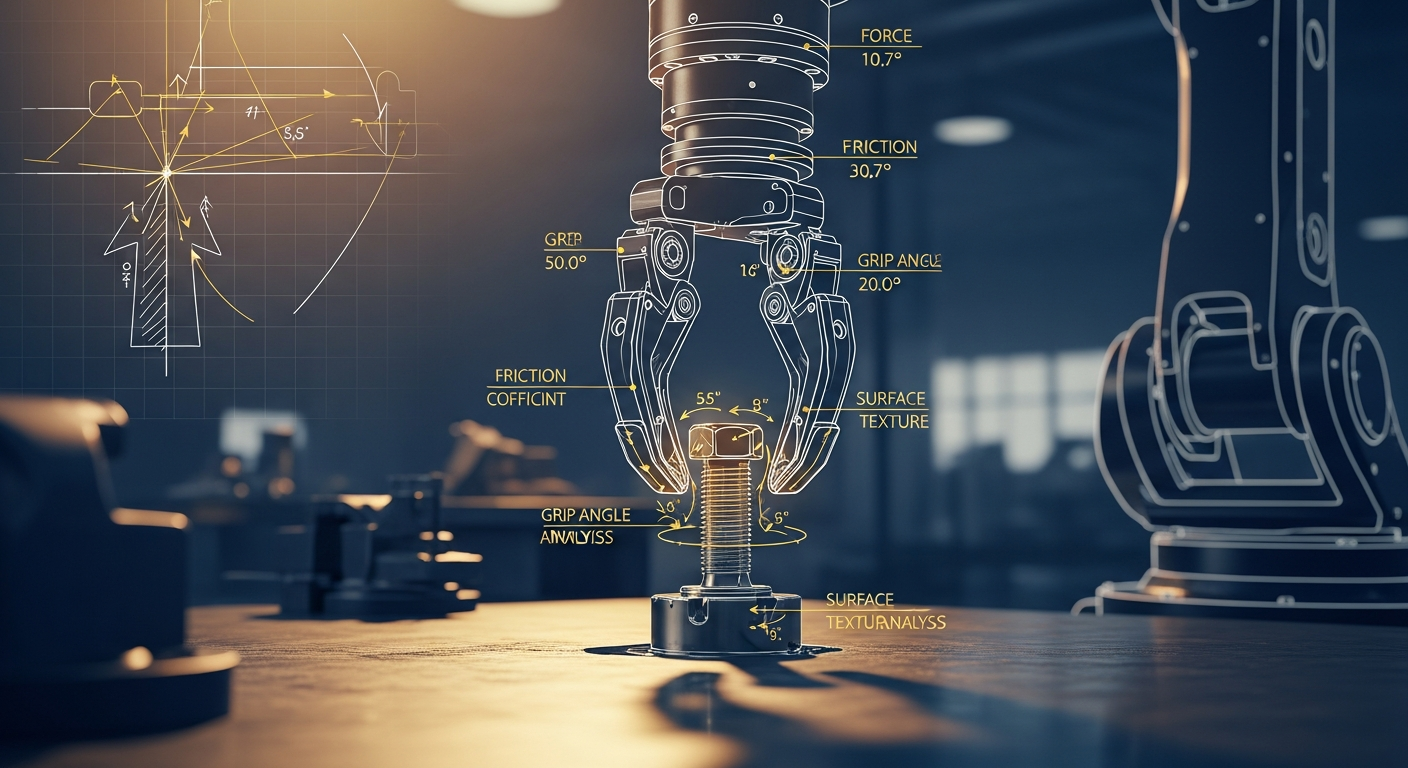
로봇은 왜 볼트를 떨어뜨리는가 — Physical AI가 공장에 필요한 진짜 이유
AI가 데이터 패턴만 외우는 시대는 끝나고 있다. 물리 법칙을 이해하는 Physical AI가 제조 현장에 왜 필요한지, KAIST 교수와 자동차 부품 공장 팀장이 볼트 하나를 놓고 이야기한다.

디지털 트윈, 당신 공장엔 이미 있다 — 엑셀과 MES 사이 어딘가에
디지털 트윈은 10억짜리 3D 시뮬레이션이 아니다. 지금 쓰고 있는 엑셀에 좋은 질문 하나를 더하는 것 — 두 전문가가 중소 제조기업이 이미 가진 데이터로 예측하는 공장을 만드는 현실적 로드맵을 제시한다.
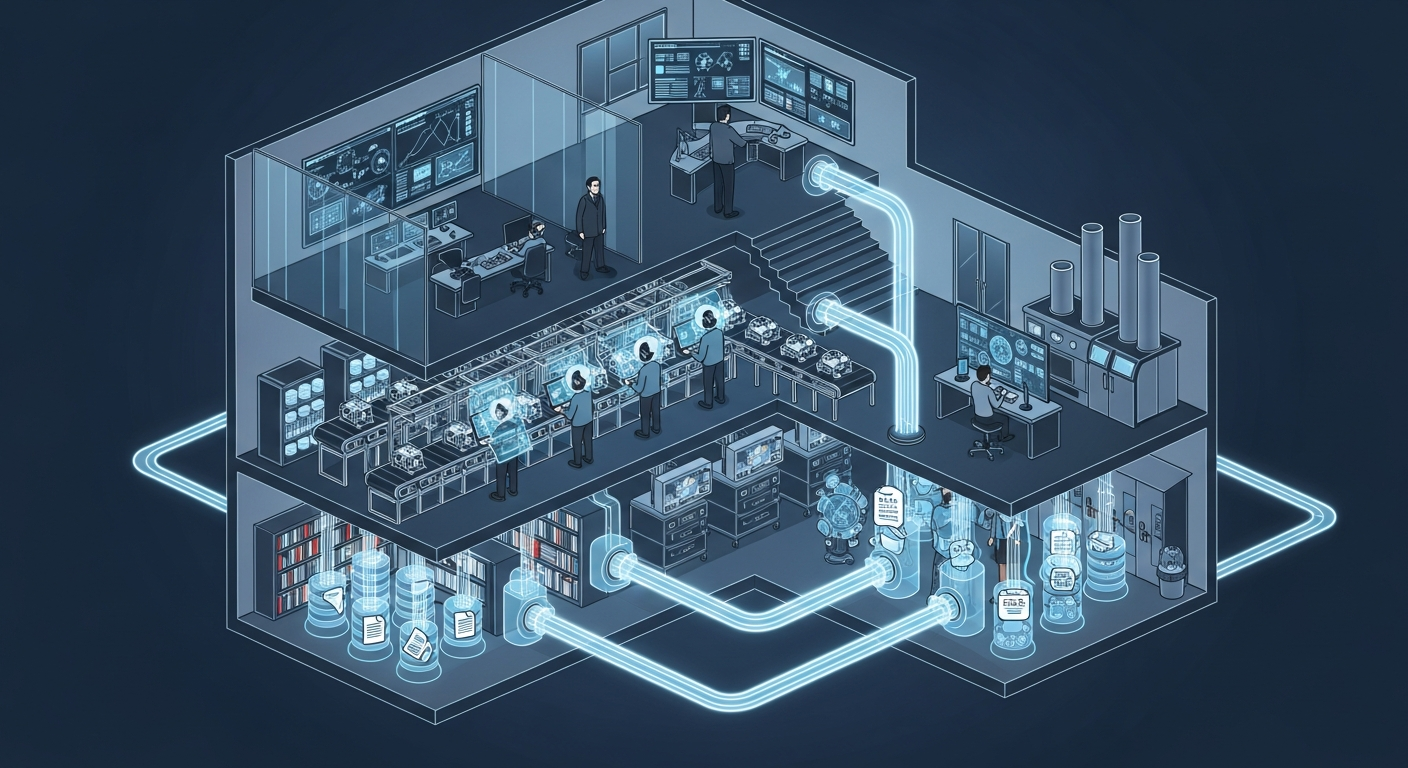
공장의 뇌는 어떻게 생겼는가 — 제조운영 AI 아키텍처 해부
지식관리, 업무자동화, 의사결정지원 — 따로 보면 다 있던 것들입니다. 제조 AI의 진짜 차이는 이 셋이 순환하면서 '우리 공장만의 지능'을 만든다는 데 있습니다.
Want to apply this in your factory?
MOAI helps manufacturing companies adopt AI tailored to their operations.
Talk to us →