Semantic search
{{Short description|Contextual queries}} '''Semantic search''' denotes search with meaning, as distinguished from lexical search where the search engine looks for literal matches of the query words or variants of them, without understanding the overall meaning of the query.{{cite journal |last1=Bast |first1=Hannah |last2=Buchhold |first2=Björn | last3=Haussmann | first3=Elmar | title=Semantic search on text and knowledge bases |journal=Foundations and Trends in Information Retrieval |date=2016 |volume=10 |issue=2–3 |pages=119–271 |doi=10.1561/1500000032 |url=https://www.nowpublishers.com/article/Details/INR-032 |access-date=1 December 2018|url-access=subscription }} Semantic search is an approach to [[information retrieval]] that seeks to improve [[search engine technology|search]] accuracy by understanding [[User_intent|the searcher's intent]] and the [[context (language use)|context]]ual meaning of terms as they appear in the searchable dataspace, whether on the [[World Wide Web|Web]] or within a closed system, to generate more relevant results. Modern semantic search systems often use vector embeddings to represent words, phrases, or documents as numerical vectors, allowing the retrieval engine to measure similarity based on meaning rather than exact keyword matches.{{Cite journal |last=Klampanos |first=Iraklis A. |date=2009-06-02 |title=Manning Christopher, Prabhakar Raghavan, Hinrich Schütze: Introduction to information retrieval |url=https://doi.org/10.1007/s10791-009-9096-x |journal=Information Retrieval |volume=12 |issue=5 |pages=609–612 |doi=10.1007/s10791-009-9096-x |issn=1386-4564|url-access=subscription }}{{Cite journal |last=Kim |first=Bosung |last2=Hong |first2=Taesuk |last3=Ko |first3=Youngjoong |last4=Seo |first4=Jungyun |date=2020 |title=Multi-Task Learning for Knowledge Graph Completion with Pre-trained Language Models |url=https://doi.org/10.18653/v1/2020.coling-main.153 |journal=Proceedings of the 28th International Conference on Computational Linguistics |location=Stroudsburg, PA, USA |publisher=International Committee on Computational Linguistics |doi=10.18653/v1/2020.coling-main.153|doi-access=free }}
Some authors regard semantic search as a set of techniques for retrieving knowledge from richly structured data sources like [[Ontology (information science)|ontologies]] and [[XML]] as found on the [[Semantic Web]].{{cite book|last1=Dong|first1=Hai|title=A survey in semantic search technologies|date=2008|publisher=IEEE|pages=403–408|url=https://www.researchgate.net/publication/224331268|access-date=1 May 2009}} Such technologies enable the formal articulation of [[domain knowledge]] at a high level of expressiveness and could enable the user to specify their intent in more detail at query time.{{cite conference|chapter=Domain Specific Data Retrieval on the Semantic Web|last1=Ruotsalo |first1=T. |title=The Semantic Web: Research and Applications |date=May 2012 |conference=Eswc2012 |series=Lecture Notes in Computer Science |volume=7295 |doi=10.1007/978-3-642-30284-8_35|pages=422–436|isbn=978-3-642-30283-1 |doi-access=free}} The articulation enhances content relevance and depth by including specific places, people, or concepts relevant to the query.
== Models and tools == Tools like Google's [[Knowledge Graph (Google)|Knowledge Graph]] provide structured relationships between entities to enrich query interpretation.Singhal, A. (2012). Introducing the Knowledge Graph: things, not strings. Google Blog. https://blog.google/products/search/introducing-knowledge-graph-things-not/
Models like [[BERT (language model)|BERT]] and Sentence-BERT convert words or sentences into dense vectors for similarity comparison.Reimers, N., & Gurevych, I. (2019). Sentence-BERT: Sentence Embeddings using Siamese BERT-Networks. ''EMNLP 2019''. https://arxiv.org/abs/1908.10084
Semantic ontologies like [[Web Ontology Language]], [[Resource Description Framework]], and [[Schema.org]] organize concepts and relationships, allowing systems to infer related terms and deeper meanings.Bodenreider, O. (2004). The Unified Medical Language System (UMLS): integrating biomedical terminology. ''Nucleic Acids Research'', 32(suppl_1), D267–D270.
Hybrid search models combine [[lexical retrieval]] (e.g., BM25) with [[semantic ranking]] using pretrained transformer models for optimal performance.Lin, J., et al. (2021). Pretrained Transformers for Text Ranking: BERT and Beyond. https://arxiv.org/abs/2010.06467
==See also== *[[List of search engines]] *[[Semantic web]] *[[Semantic unification]] *[[Resource Description Framework]] *[[Natural language search engine]] *[[Semantic query]] *[[Vector database]] *[[Word embeddings]]
==References== {{reflist}}
==External links==
- [https://km.aifb.kit.edu/ws/semsearch08/ Semantic Search 2008 Workshop at ESWC'08]
- [https://km.aifb.kit.edu/ws/semsearch10/ Semantic Search 2010 Workshop at WWW2010]
- [https://web.archive.org/web/20080325224931/http://www.yr-bcn.es/esair08/ Workshop on Exploiting Semantic Annotations in Information Retrieval at ECIR'08].
{{Semantic Web}} {{Internet search}}
[[Category:Internet search engines]] [[Category:Semantic Web]] [[Category:Information retrieval genres]]
{{internet-stub}}
[[de:Semantische Suche]]
From MOAI Insights
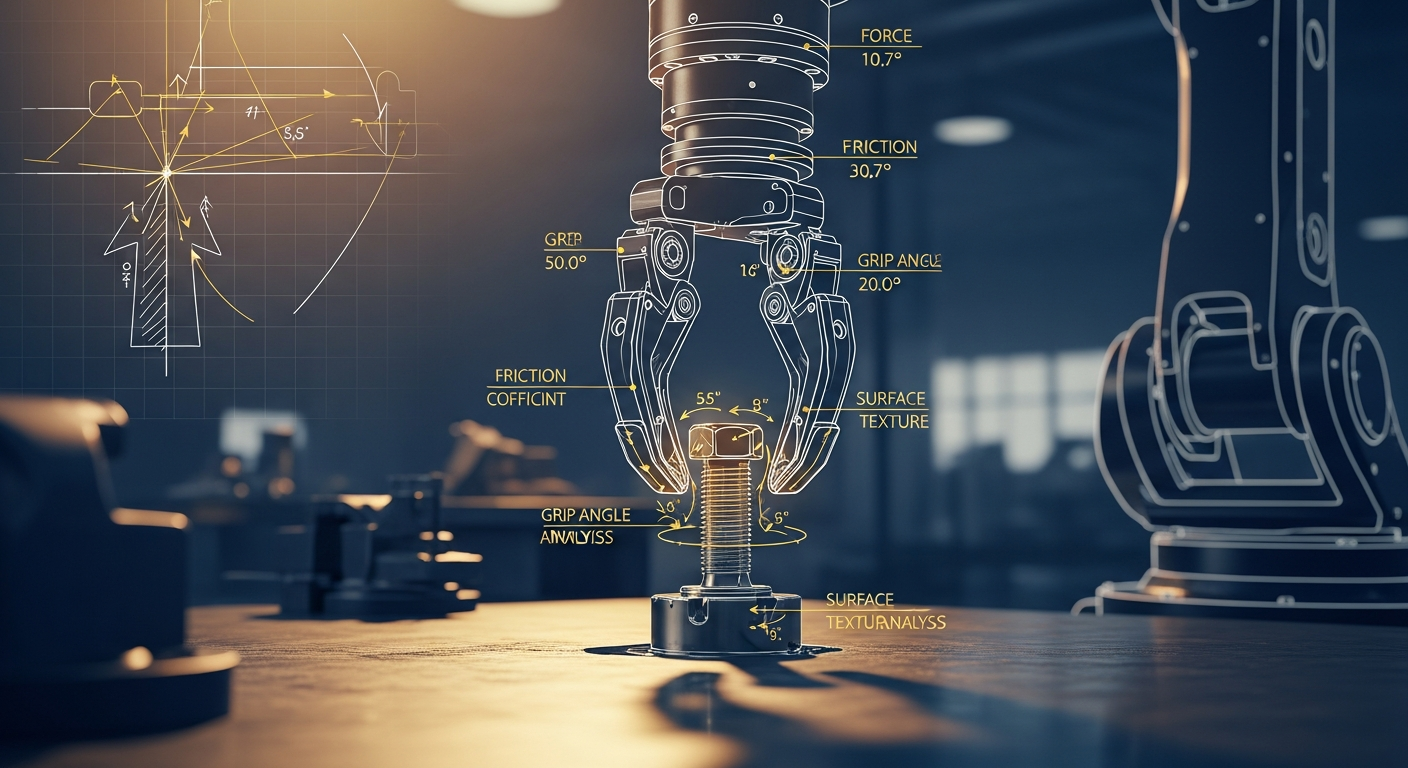
로봇은 왜 볼트를 떨어뜨리는가 — Physical AI가 공장에 필요한 진짜 이유
AI가 데이터 패턴만 외우는 시대는 끝나고 있다. 물리 법칙을 이해하는 Physical AI가 제조 현장에 왜 필요한지, KAIST 교수와 자동차 부품 공장 팀장이 볼트 하나를 놓고 이야기한다.

디지털 트윈, 당신 공장엔 이미 있다 — 엑셀과 MES 사이 어딘가에
디지털 트윈은 10억짜리 3D 시뮬레이션이 아니다. 지금 쓰고 있는 엑셀에 좋은 질문 하나를 더하는 것 — 두 전문가가 중소 제조기업이 이미 가진 데이터로 예측하는 공장을 만드는 현실적 로드맵을 제시한다.

공장의 뇌는 어떻게 생겼는가 — 제조운영 AI 아키텍처 해부
지식관리, 업무자동화, 의사결정지원 — 따로 보면 다 있던 것들입니다. 제조 AI의 진짜 차이는 이 셋이 순환하면서 '우리 공장만의 지능'을 만든다는 데 있습니다.
Want to apply this in your factory?
MOAI helps manufacturing companies adopt AI tailored to their operations.
Talk to us →