Timing mark
{{Short description|Indicator within an internal-combustion engine}} {{refimprove|date=August 2025}} [[Image:Timing marks.svg|thumb|right|300px|Timing mark on pulley at 6° before [[top dead centre|TDC]].]]
A '''timing mark''' is an indicator used for setting the timing of the [[ignition system]] of an [[engine]], typically found on the [[crankshaft]] pulley (as pictured) or the [[flywheel]].{{cite book |last1=Beever |first1=Colin |title=Ignition and Timing: A Guide to Rebuilding, Repair and Replacement |date=30 June 2015 |publisher=Crowood |isbn=9781847979742 |url=https://books.google.com/books?id=U2JGCgAAQBAJ |access-date=1 May 2023}} These have the largest radius rotating at crankshaft speed and therefore are the place where marks at one degree intervals will be furthest apart.
On older engines, it is common to set the [[ignition timing]] using a [[timing light]], which flashes in time with the ignition system (and hence engine rotation).{{cite news |title=Car Care Guide: The Timing Light |url=https://books.google.com/books?id=-dgDAAAAMBAJ |access-date=1 May 2023 |agency=Popular Mechanics |date=October 1981| publisher=Hearst Magazines }} Shining the light on the timing marks makes them appear stationary due to the [[stroboscopic effect]]. The ignition timing can then be adjusted to fire at the correct point in the engine's rotation, typically a few degrees before [[top dead centre]] and advancing with increasing engine speed. The timing can be adjusted by loosening and slightly rotating the [[distributor]] in its seat.
Modern engines often use a [[crank sensor]] directly connected to the [[engine management system]].
The term can also be used to describe the tick marks along the length of an [[optical mark recognition]] sheet in order to confirm the location of the sheet as it passes through the reader. See, for example, U.S. Patent 3,218,439 (filed 1964, granted 1965), which refers to a timing track down the left side of the form, and U.S. Patent 3,267,258 (filed 1963, granted 1966), which refers to a column of timing marks on the right side of the form.
The term can also be used to describe the timing patterns used in some [[barcode]]s, such as [[PostBar]], [[Data Matrix]], [[Aztec Code]], etc.
==References== {{Reflist}}
==External links== *{{Commonscatinline|Timing marks}}
{{Automotive engine |collapsed}}
[[Category:Ignition systems]] [[Category:Synchronization]] [[Category:Engine technology]]
From MOAI Insights
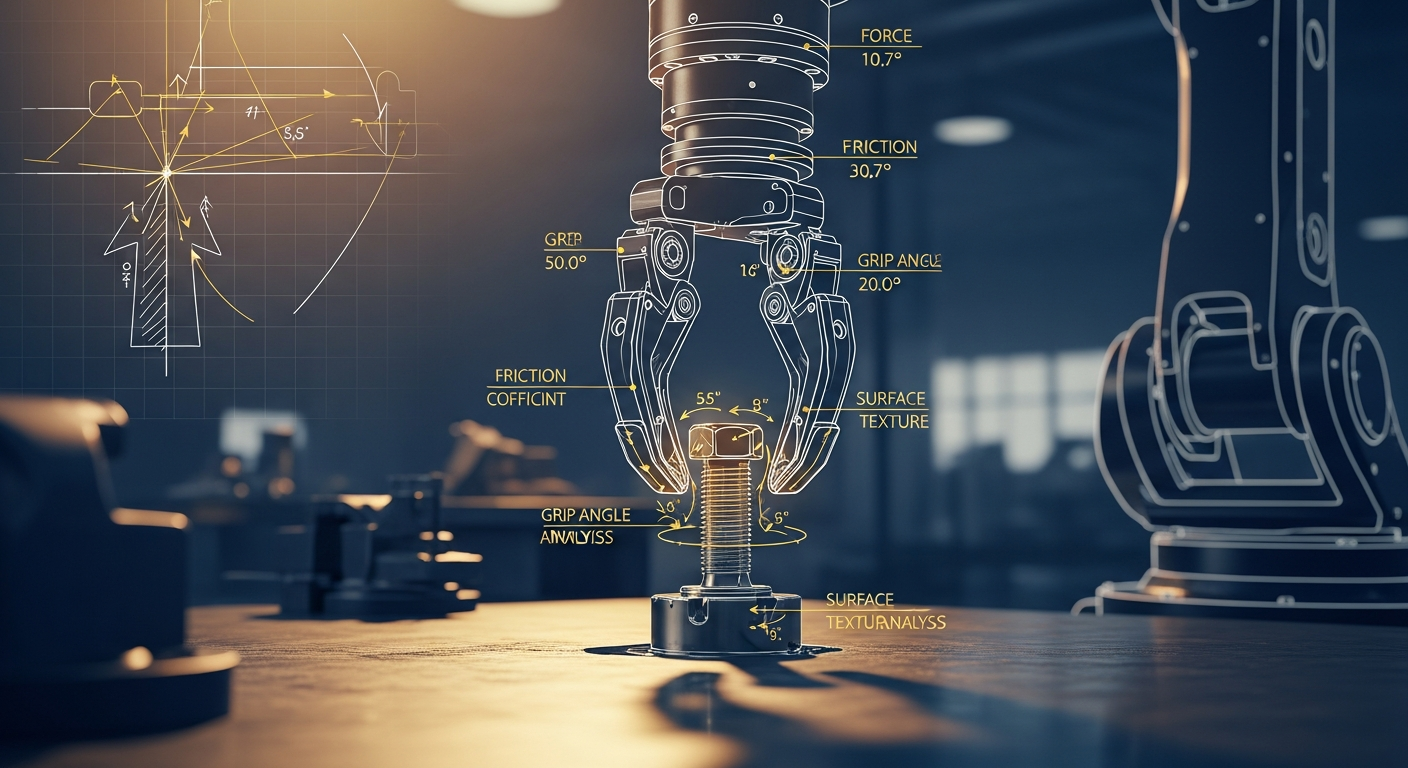
로봇은 왜 볼트를 떨어뜨리는가 — Physical AI가 공장에 필요한 진짜 이유
AI가 데이터 패턴만 외우는 시대는 끝나고 있다. 물리 법칙을 이해하는 Physical AI가 제조 현장에 왜 필요한지, KAIST 교수와 자동차 부품 공장 팀장이 볼트 하나를 놓고 이야기한다.

디지털 트윈, 당신 공장엔 이미 있다 — 엑셀과 MES 사이 어딘가에
디지털 트윈은 10억짜리 3D 시뮬레이션이 아니다. 지금 쓰고 있는 엑셀에 좋은 질문 하나를 더하는 것 — 두 전문가가 중소 제조기업이 이미 가진 데이터로 예측하는 공장을 만드는 현실적 로드맵을 제시한다.
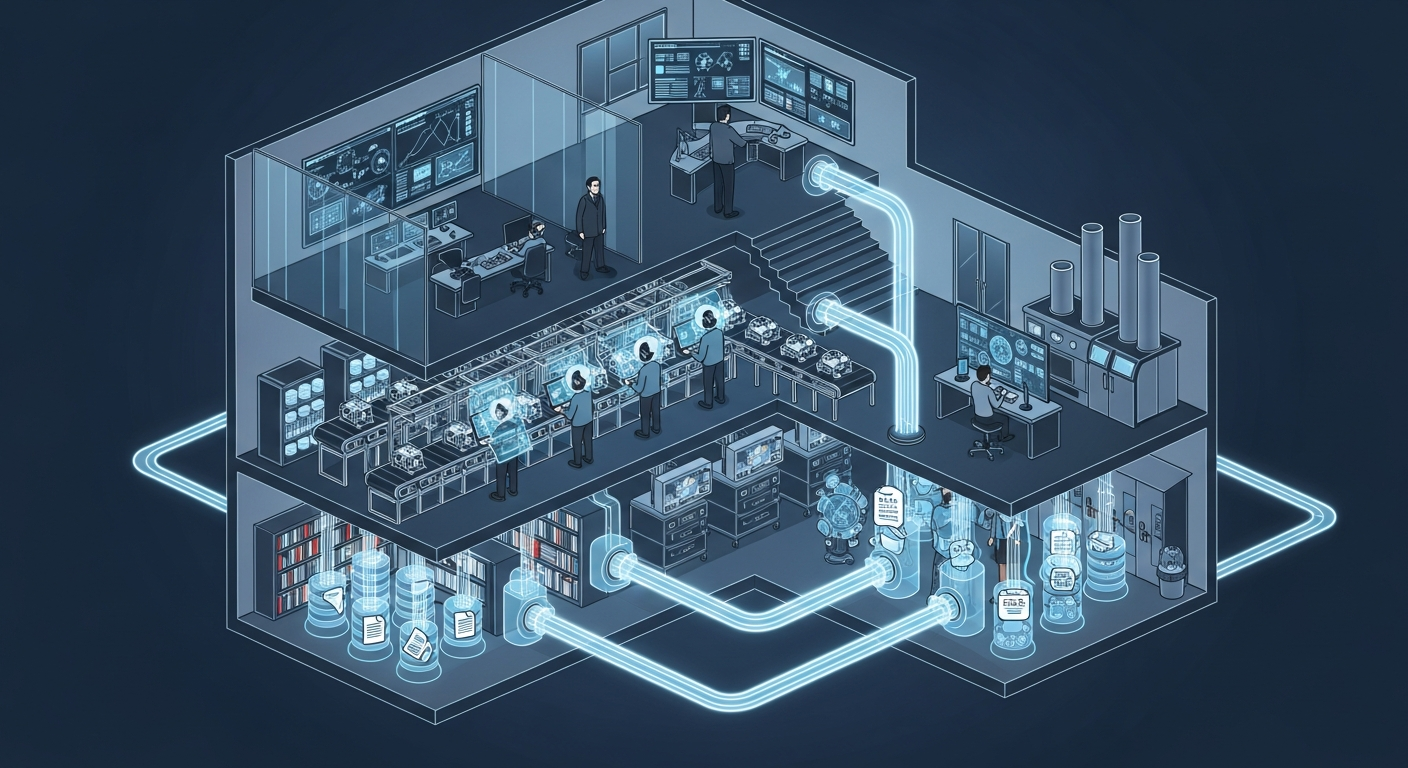
공장의 뇌는 어떻게 생겼는가 — 제조운영 AI 아키텍처 해부
지식관리, 업무자동화, 의사결정지원 — 따로 보면 다 있던 것들입니다. 제조 AI의 진짜 차이는 이 셋이 순환하면서 '우리 공장만의 지능'을 만든다는 데 있습니다.
Want to apply this in your factory?
MOAI helps manufacturing companies adopt AI tailored to their operations.
Talk to us →