Mean time to repair
{{Short description|Measure of the maintainability of repairable items}} '''Mean time to repair''' ('''MTTR''') is a basic measure of the maintainability of [[repairable]] items. It represents the [[arithmetic mean|average]] time required to repair a failed component or device.{{Cite web |url=http://www.businessdictionary.com/definition/mean-time-to-repair-MTTR.html |title=BusinessDictionary.com, Mean Time To Repair definition |access-date=2009-09-01 |archive-date=2018-05-27 |archive-url=https://web.archive.org/web/20180527023318/http://www.businessdictionary.com/definition/mean-time-to-repair-MTTR.html |url-status=dead }} Expressed mathematically, it is the total [[corrective maintenance]] time for failures divided by the total number of corrective maintenance actions for failures during a given period of time.{{Cite web|url=http://www.its.bldrdoc.gov/projects/devglossary/_mean_time_to_repair.html|archiveurl=https://web.archive.org/web/20080925083238/http://www.its.bldrdoc.gov/projects/devglossary/_mean_time_to_repair.html|url-status=dead|title=Institute for Telecommunications Sciences, Mean Time To Repair definition|archivedate=September 25, 2008}} It generally does not include lead time for parts not readily available or other Administrative or Logistic [[Downtime]] (ALDT).
In [[fault-tolerant design]], MTTR is usually considered to also include the time the fault is latent (the time from when the failure occurs until it is detected). If a latent fault goes undetected until an independent failure occurs, the system may not be able to recover.
MTTR is often part of a maintenance contract, where a system whose MTTR is 24 hours is generally more valuable than for one of 7 days if mean time between failures is equal, because its Operational [[Availability]] is higher.
However, in the context of a maintenance contract, it would be important to distinguish whether MTTR is meant to be a measure of the mean time between the point at which the failure is first discovered until the point at which the equipment returns to operation (usually termed "mean time to recovery"), or only a measure of the elapsed time between the point where repairs actually begin until the point at which the equipment returns to operation (usually termed "mean time to repair"). For example, a system with a service contract guaranteeing a mean time to "repair" of 24 hours, but with additional part lead times, administrative delays, and technician transportation delays adding up to a mean of 6 days, would not be any more attractive than another system with a service contract guaranteeing a mean time to "recovery" of 7 days.
==See also==
- [[Mean time to recovery]]
- [[Mean time between failures]]
- [[Mean down time]]
- [[Time between overhauls]]
== References == {{reflist}} {{Reliability indices}} [[Category:Engineering failures]] [[Category:Reliability indices]]
[[de:Mean Time To Recover]] [[fr:MTTR]] [[ja:平均修復時間]] [[sv:MTTR]]
Related Articles
From MOAI Insights

디지털 트윈, 당신 공장엔 이미 있다 — 엑셀과 MES 사이 어딘가에
디지털 트윈은 10억짜리 3D 시뮬레이션이 아니다. 지금 쓰고 있는 엑셀에 좋은 질문 하나를 더하는 것 — 두 전문가가 중소 제조기업이 이미 가진 데이터로 예측하는 공장을 만드는 현실적 로드맵을 제시한다.
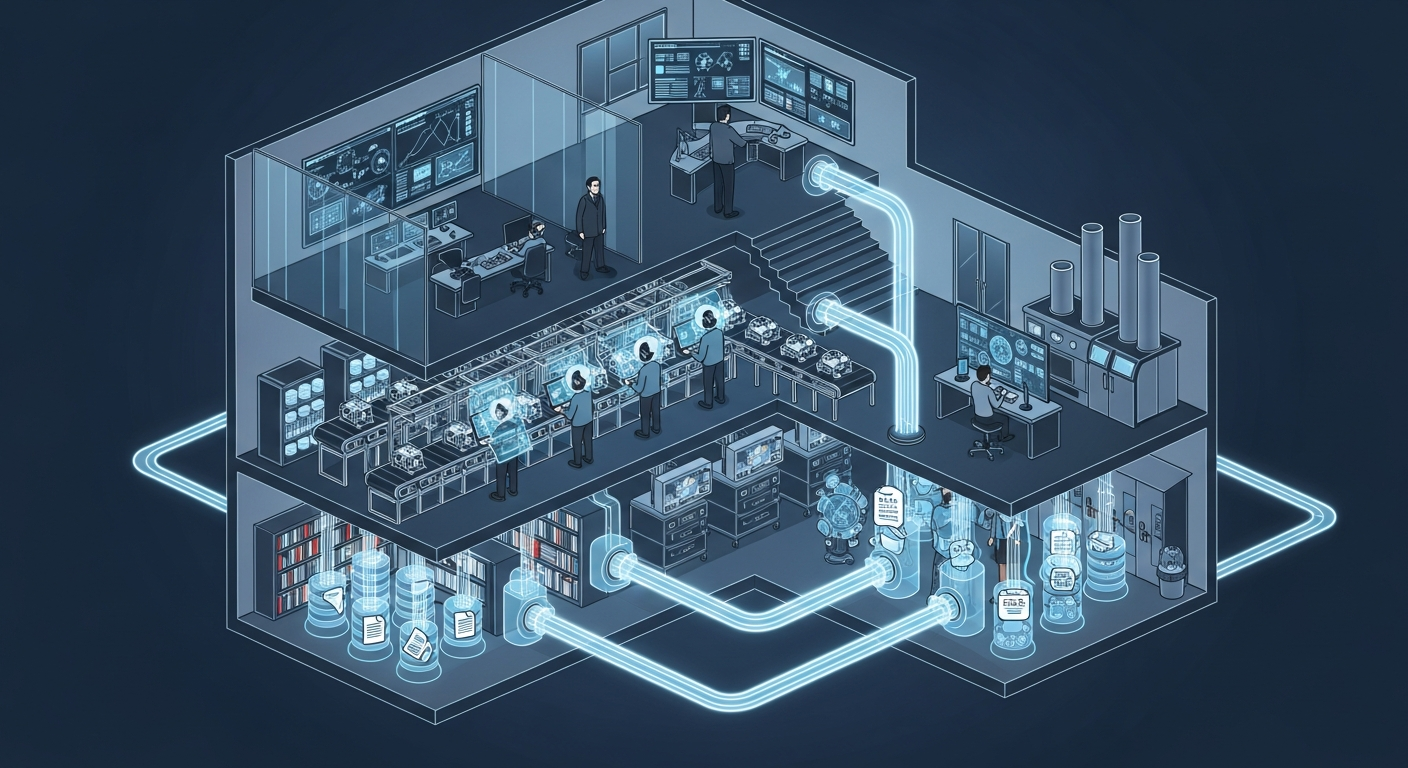
공장의 뇌는 어떻게 생겼는가 — 제조운영 AI 아키텍처 해부
지식관리, 업무자동화, 의사결정지원 — 따로 보면 다 있던 것들입니다. 제조 AI의 진짜 차이는 이 셋이 순환하면서 '우리 공장만의 지능'을 만든다는 데 있습니다.
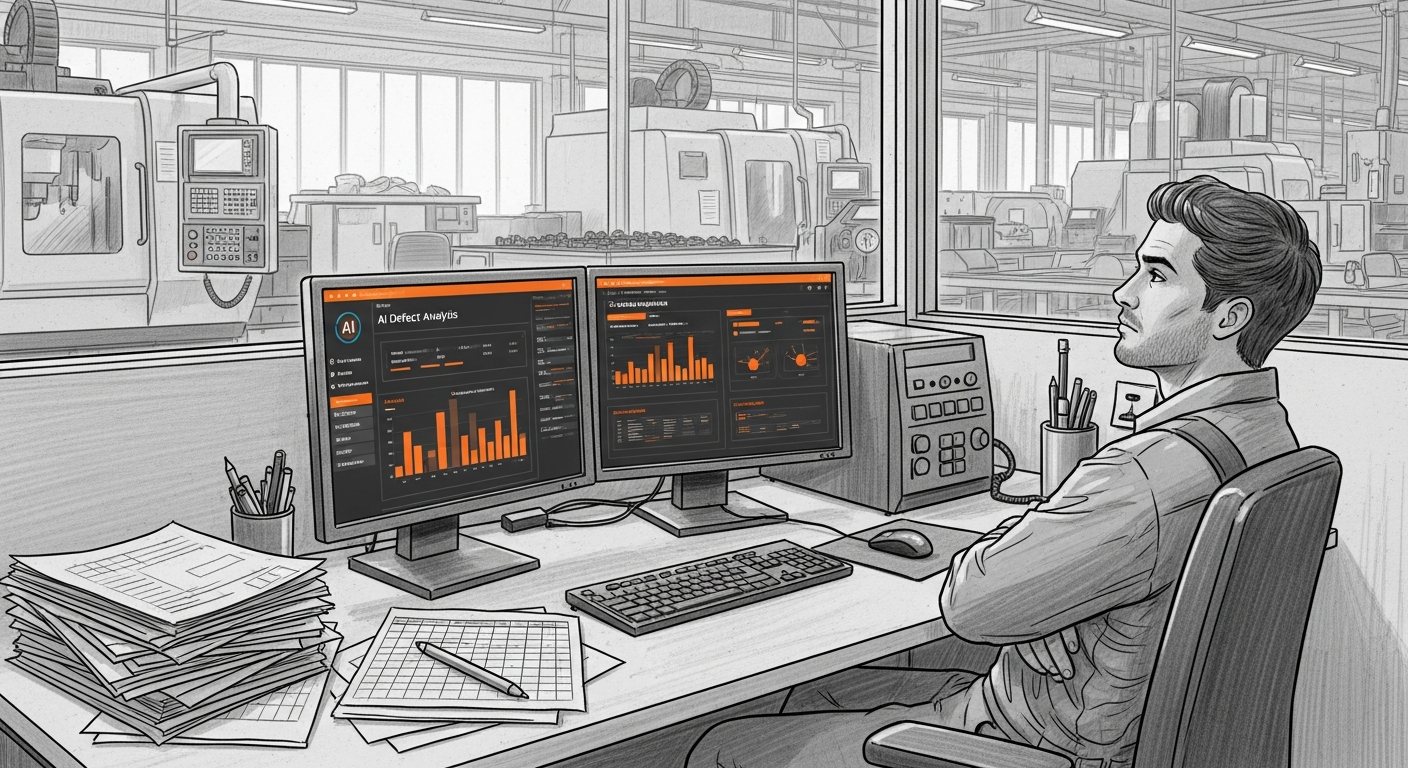
그 30분을 18년 동안 매일 반복했습니다 — 품질팀장이 본 AI Agent
18년차 품질팀장이 매일 아침 30분씩 반복하던 데이터 분석을 AI Agent가 3분 만에 해냈습니다. 챗봇과는 완전히 다른 물건 — 직접 시스템에 접근해서 데이터를 꺼내고 분석하는 AI의 현장 도입기.
Want to apply this in your factory?
MOAI helps manufacturing companies adopt AI tailored to their operations.
Talk to us →