Biotechnology is a multidisciplinary field that involves the integration of natural sciences and engineering sciences to achieve the application of organisms and parts thereof for products and services. Specialists in the field are known as biotechnologists.
The term biotechnology was first used by Károly Ereky in 1919 to refer to the production of products from raw materials with the aid of living organisms. The core principle of biotechnology involves harnessing biological systems and organisms, such as bacteria, yeast, and plants, to perform specific tasks or produce valuable substances.
 Source: Wikimedia Commons, CC BY 4.0
Biotechnology has had a significant impact on many areas of society, from medicine to agriculture to environmental science. One of the key techniques used in biotechnology is genetic engineering, which allows scientists to modify the genetic makeup of organisms to achieve desired outcomes. This can involve inserting genes from one organism into another, and consequently, creating new traits or modifying existing ones.
Other important techniques used in biotechnology include tissue culture, which allows researchers to grow cells and tissues in the lab for research and medical purposes, and fermentation, which is used to produce a wide range of products such as beer, wine, and cheese.
The applications of biotechnology are diverse and have led to the development of products like drugs, biofuels, genetically modified crops, and innovative materials. It has also been used to address environmental challenges, such as developing biodegradable plastics and using microorganisms to clean up contaminated sites.
Biotechnology is a rapidly evolving field with significant potential to address pressing global challenges and improve the quality of life for people around the world; however, despite its numerous benefits, it also poses ethical and societal challenges, such as questions around genetic modification and intellectual property rights. As a result, there is ongoing debate and regulation surrounding the use and application of biotechnology in various industries and fields.
Biotechnology encompasses a wide range of procedures for modifying living organisms for human purposes, going back to domestication of animals, the cultivation of plants, and "improvements" to these through breeding programs that employ artificial selection and hybridization. Modern usage also includes genetic engineering, as well as cell and tissue culture technologies. The American Chemical Society defines biotechnology as the application of biological organisms, systems, or processes by various industries to learning about the science of life and the improvement of the value of materials and organisms, such as pharmaceuticals, crops, and livestock. As per the European Federation of Biotechnology, biotechnology is the integration of natural science and organisms, cells, parts thereof, and molecular analogues for products and services. Biotechnology is based on the basic biological sciences (e.g., molecular biology, biochemistry, cell biology, embryology, genetics, microbiology) and conversely provides methods to support and perform basic research in biology.
Biotechnology is the research and development in the laboratory using bioinformatics for exploration, extraction, exploitation, and production from any living organisms and any source of biomass by means of biochemical engineering where high value-added products could be planned (reproduced by biosynthesis, for example), forecasted, formulated, developed, manufactured, and marketed for the purpose of sustainable operations (for the return from bottomless initial investment on R & D) and gaining durable patents rights (for exclusives rights for sales, and prior to this to receive national and international approval from the results on animal experiment and human experiment, especially on the pharmaceutical branch of biotechnology to prevent any undetected side-effects or safety concerns by using the products). The utilization of biological processes, organisms or systems to produce products that are anticipated to improve human lives is termed biotechnology.
By contrast, bioengineering is generally thought of as a related field that more heavily emphasizes higher systems approaches (not necessarily the altering or using of biological materials directly) for interfacing with and utilizing living things. Bioengineering is the application of the principles of engineering and natural sciences to tissues, cells, and molecules. This can be considered as the use of knowledge from working with and manipulating biology to achieve a result that can improve functions in plants and animals. Relatedly, biomedical engineering is an overlapping field that often draws upon and applies biotechnology (by various definitions), especially in certain sub-fields of biomedical or chemical engineering such as tissue engineering, biopharmaceutical engineering, and genetic engineering.
History
Many forms of human-derived agriculture fit the broad definition of "utilizing a biotechnological system to make products". The cultivation of plants may be viewed as the earliest biotechnological enterprise.
Agriculture has been theorized to have become the dominant way of producing food since the Neolithic Revolution. Through early biotechnology, the earliest farmers selected and bred the best-suited crops (e.g., those with the highest yields) to produce enough food to support a growing population. As crops and fields became increasingly large and difficult to maintain, it was discovered that specific organisms and their by-products could effectively fertilize, restore nitrogen, and control pests. Throughout the history of agriculture, farmers have inadvertently altered the genetics of their crops through introducing them to new environments and breeding them with other plants — one of the first forms of biotechnology.
 Source: Wikimedia Commons, Public domain
These processes were also included in the early fermentation of beer. These processes were introduced in early Mesopotamia, Egypt, China and India, and still use the same basic biological methods. In brewing, malted grains (containing enzymes) convert starch from grains into sugar and then adding specific yeasts to produce beer. In this process, carbohydrates in the grains broke down into alcohols, such as ethanol. Later, other cultures developed the process of lactic acid fermentation, which produced other preserved foods, such as soy sauce. Fermentation was also used in this time period to produce leavened bread. Although the process of fermentation was not fully understood until Louis Pasteur's work in 1857, it is still the first use of biotechnology to convert a food source into another form.
Before the time of Charles Darwin's work and life, animal and plant scientists had already used selective breeding. Darwin added to that body of work with his scientific observations about the ability of science to change species. These accounts contributed to Darwin's theory of natural selection.
For thousands of years, humans have used selective breeding to improve the production of crops and livestock to use them for food. In selective breeding, organisms with desirable characteristics are mated to produce offspring with the same characteristics. For example, this technique was used with corn to produce the largest and sweetest crops.
In the early twentieth century scientists gained a greater understanding of microbiology and explored ways of manufacturing specific products. In 1917, Chaim Weizmann first used a pure microbiological culture in an industrial process, that of manufacturing corn starch using Clostridium acetobutylicum, to produce acetone, which the United Kingdom desperately needed to manufacture explosives during World War I.
Biotechnology has also led to the development of antibiotics. In 1928, Alexander Fleming discovered the mold Penicillium. His work led to the purification of the antibiotic formed by the mold by Howard Florey, Ernst Boris Chain.
From MOAI Insights
새벽 3시, 반장의 귀가 처음으로 받아 적혔다
23년 경력 반장은 사출기 소리만 듣고 불량을 안다. 그 귀가 처음으로 데이터가 되던 밤, 공장에서 가장 불편한 질문이 떠올랐다.
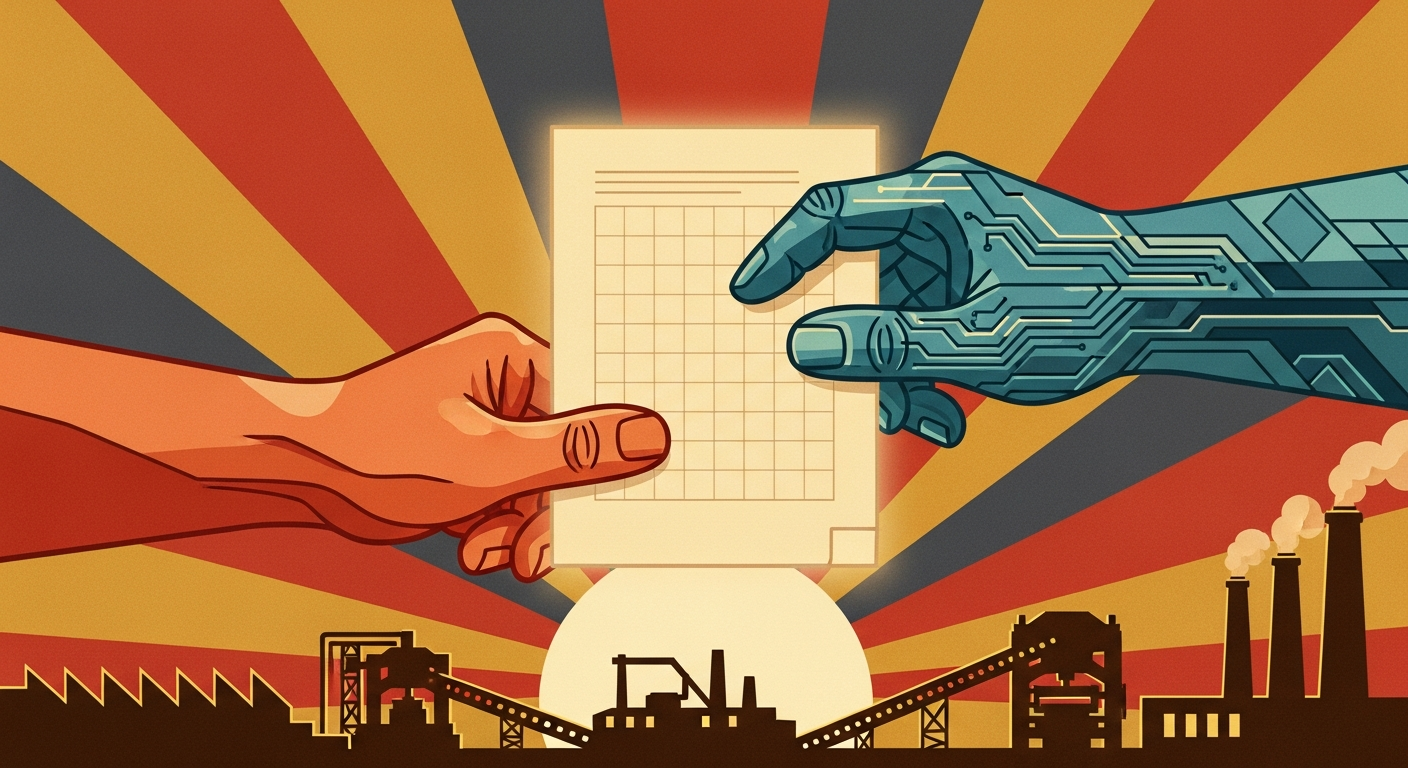
AI가 지시를 내리기 시작하면, 팀장은 무엇을 하는가 — 생산관리자에게 보내는 편지
AI Agent가 작업지시서를 스스로 생성하는 공장에서, 중간관리자의 존재 이유를 다시 묻는 공개 서신.

사장님께 드리는 편지 — 공장을 복제하시겠습니까?
독일 중소제조 컨설턴트가 한국 공장 대표에게 보내는 편지. 디지털 트윈은 기술이 아니라, 내 공장을 처음으로 객관적으로 바라보는 행위다.
Want to apply this in your factory?
MOAI helps manufacturing companies adopt AI tailored to their operations.
Talk to us →