Weaving is a method of textile production in which two distinct sets of yarns or threads are interlaced at right angles to form a fabric or cloth. The longitudinal threads are called the warp and the lateral threads are the weft, woof, or filling. The method in which these threads are interwoven affects the characteristics of the cloth.
Cloth is usually woven on a loom, a device that holds warp threads in place while filling threads are woven through them. A fabric band that meets this definition of cloth (warp threads with a weft thread winding between) can also be made using other methods, including tablet weaving, backstrap loom, or other techniques that can be done without looms.
The way the warp and filling threads interlace with each other is called the weave. The majority of woven products are created with one of three basic weaves: plain weave, satin weave, or twill weave. Woven cloth can be plain or classic (in one colour or a simple pattern), or can be woven in decorative or artistic design.
 Source: Wikimedia Commons, Public domain
Process and terminology
In general, weaving involves using a loom to interlace two sets of threads at right angles to each other: the warp which runs longitudinally and the weft (older woof) that crosses it. (Weft is an Old English word meaning "that which is woven".) One warp thread is called an end and one weft thread is called a pick. The warp threads are held taut and in parallel to each other, typically in a loom. There are many types of looms.
Weaving can be summarized as a repetition of these three actions, also called the primary motions of the loom.
- Shedding: where the warp threads (ends) are separated by raising or lowering heald frames (heddles) to form a clear space, referred to as the shed where the pick can pass
- Picking: where the weft or pick is propelled across the loom by hand, an air-jet, a rapier or a shuttle
- Beating-up or battening: where the weft is pushed up against the fell of the cloth by the reed
The warp is divided into two overlapping groups, or lines (most often adjacent threads belonging to the opposite group) that run in two planes, one above another, so the shuttle can be passed between them in a straight motion. Then, the upper group is lowered by the loom mechanism, and the lower group is raised (shedding), allowing the shuttle to pass in the opposite direction, also in a straight motion. Repeating these actions forms a fabric mesh but without beating-up, the final distance between the adjacent wefts would be irregular and far too large.
The secondary motions of the loom are the:
- Let off motion: where the warp is let off the warp beam at a regulated speed to make the filling even and of the required design
- Take up motion: takes up the woven fabric in a regulated manner so that the density of filling is maintained
The tertiary motions of the loom are the stop motions: to stop the loom in the event of a thread break. The two main stop motions are the:
- Warp stop motion
- Weft stop motion
 Source: Wikimedia Commons, Public domain
The principal parts of a loom are the frame, the warp-beam or weavers beam, the cloth-roll (apron bar), the heddles, and their mounting, the reed. The warp-beam is a wooden or metal cylinder on the back of the loom on which the warp is delivered. The threads of the warp extend in parallel order from the warp-beam to the front of the loom where they are attached to the cloth-roll. Each thread or group of threads of the warp passes through an opening (eye) in a heddle. The warp threads are separated by the heddles into two or more groups, each controlled and automatically drawn up and down by the motion of the heddles. In the case of small patterns the movement of the heddles is controlled by "cams" which move up the heddles by means of a frame called a harness; in larger patterns the heddles are controlled by a dobby mechanism, where the healds are raised according to pegs inserted into a revolving drum. Where a complex design is required, the healds are raised by harness cords attached to a Jacquard machine. Every time the harness (the heddles) moves up or down, an opening (shed) is made between the threads of warp, through which the pick is inserted. Traditionally the weft thread is inserted by a shuttle.
On a conventional loom, continuous weft thread is carried on a bobbin or pirn, in a shuttle that passes through the shed. A handloom weaver could propel the shuttle by throwing it from side to side with the aid of a picking stick. The "picking" on a power loom is done by rapidly hitting the shuttle from each side using an overpick or underpick mechanism controlled by cams 80–250 times a minute. When a pirn is depleted, it is ejected from the shuttle and replaced with the next pirn held in a battery attached to the loom. Multiple shuttle boxes allow more than one shuttle to be used. Each can carry a different colour which allows banding across the loom.
The rapier-type weaving machines do not have shuttles, they propel cut lengths of weft by means of small grippers or rapiers that pick up the filling thread and carry it halfway across the loom where another rapier picks it up and pulls it the rest of the way. Some carry the filling yarns across the loom at rates in excess of 2,000 metres per minute. Manufacturers such as Picanol have reduced the mechanical adjustments to a minimum, and control all the functions through a computer with a graphical user interface. Other types use compressed air to insert the pick. They are all fast, versatile and quiet.
The warp is sized in a starch mixture for smoother running. The loom warped (loomed or dressed) by passing the sized warp threads through two or more heddles attached to harnesses. The power weavers loom is warped by separate workers. Most looms used for industrial purposes have a machine that ties new warps threads to the waste of previously used warps threads, while still on the loom, then an operator rolls the old and new threads back on the warp beam. The harnesses are controlled by cams, dobbies or a Jacquard head.
 Source: Wikimedia Commons, CC BY-SA 4.0
The raising and lowering sequence of warp threads in various sequences gives rise to many possible weave structures:
- Plain weave: plain, and hopsacks, poplin, taffeta, poult-de-soie, pibiones and grosgrain
- Twill weave: these are described by weft float followed by warp float, arranged to give diagonal pattern; examples are 2/1 twill, 3/3 twill, or 1/2 twill. These are softer fabrics than plain weaves.
- Satin weave: satins and sateens
- Complex computer-generated interlacings, such as Jacquard fabric
- Pile fabrics: fabrics with a surface of cut threads (a pile), such as velvets and velveteens
 Source: Wikimedia Commons, Public domain
Selvage refers to the fabric's edge, which may be marked with the manufacturer's detail. It is a narrow edge of a woven fabric parallel to its length.
Thrums are the remainder yarns for tying on the loom. The portion that is not weavable warp. It is also called loom waste.
Both warp and weft can be visible in the final product. By spacing the warp more closely, it can completely cover the weft that binds it, giving a warp faced textile such as rep weave. Conversely, if the warp is spread out, the weft can slide down and completely cover the warp, giving a weft faced textile, such as a tapestry or a Kilim rug. There are a variety of loom styles for hand weaving and tapestry.
 Source: Wikimedia Commons, Public domain
Archaeology
There are some indications that weaving was already known in the Paleolithic Era, as early as 27,000 years ago. An indistinct textile impression has been found at the Dolní Věstonice site. According to the find, the weavers of the Upper Palaeolithic were manufacturing a variety of cordage types, produced plaited basketry and sophisticated twined and plain woven cloth. The artifacts include imprints in clay and burned remnants of cloth.
The oldest known textiles found in the Americas are remnants of six finely woven textiles and cordage found in Guitarrero Cave, Peru. The weavings, made from plant fibres, are dated between 10,100 and 9080 BCE.
In 2013 a piece of
 Source: Wikimedia Commons, CC BY-SA 2.0
From MOAI Insights
새벽 3시, 반장의 귀가 처음으로 받아 적혔다
23년 경력 반장은 사출기 소리만 듣고 불량을 안다. 그 귀가 처음으로 데이터가 되던 밤, 공장에서 가장 불편한 질문이 떠올랐다.
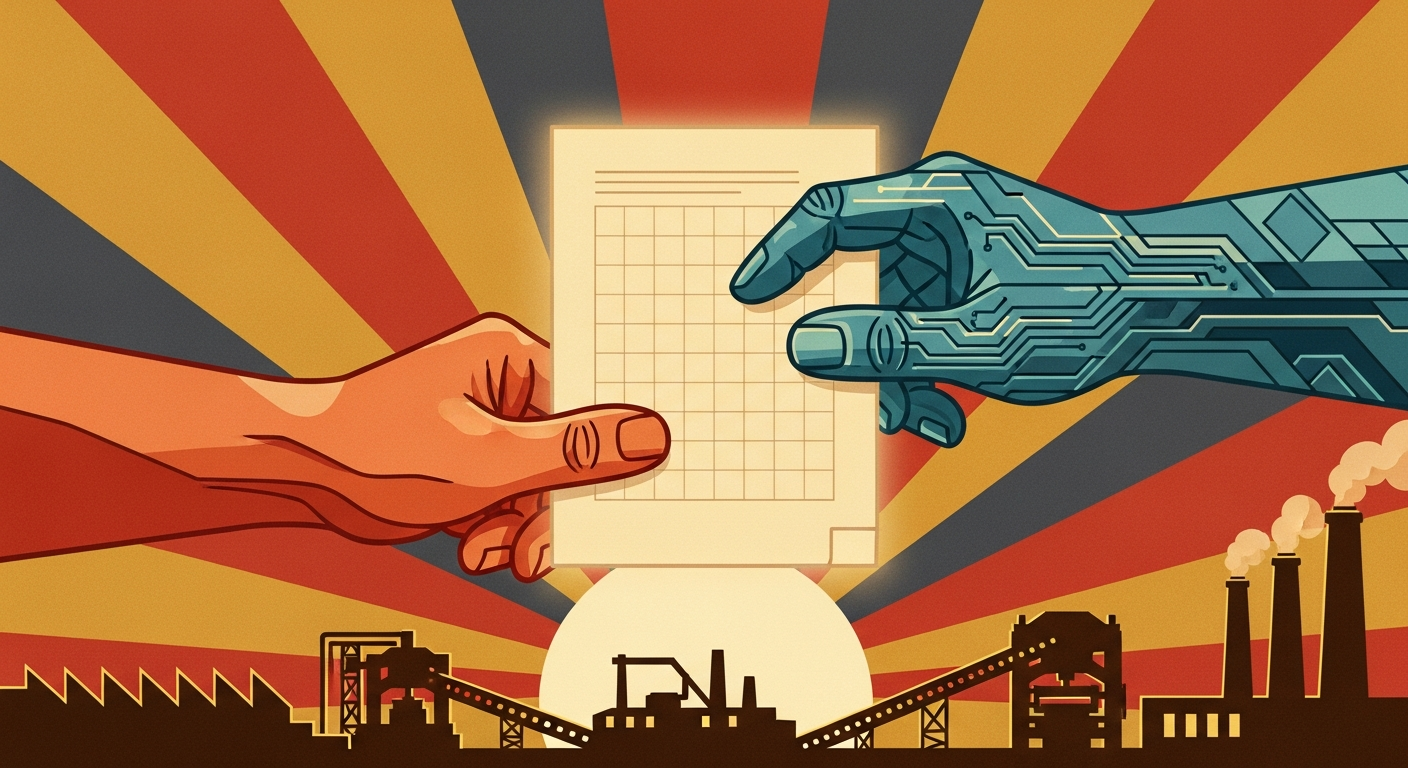
AI가 지시를 내리기 시작하면, 팀장은 무엇을 하는가 — 생산관리자에게 보내는 편지
AI Agent가 작업지시서를 스스로 생성하는 공장에서, 중간관리자의 존재 이유를 다시 묻는 공개 서신.
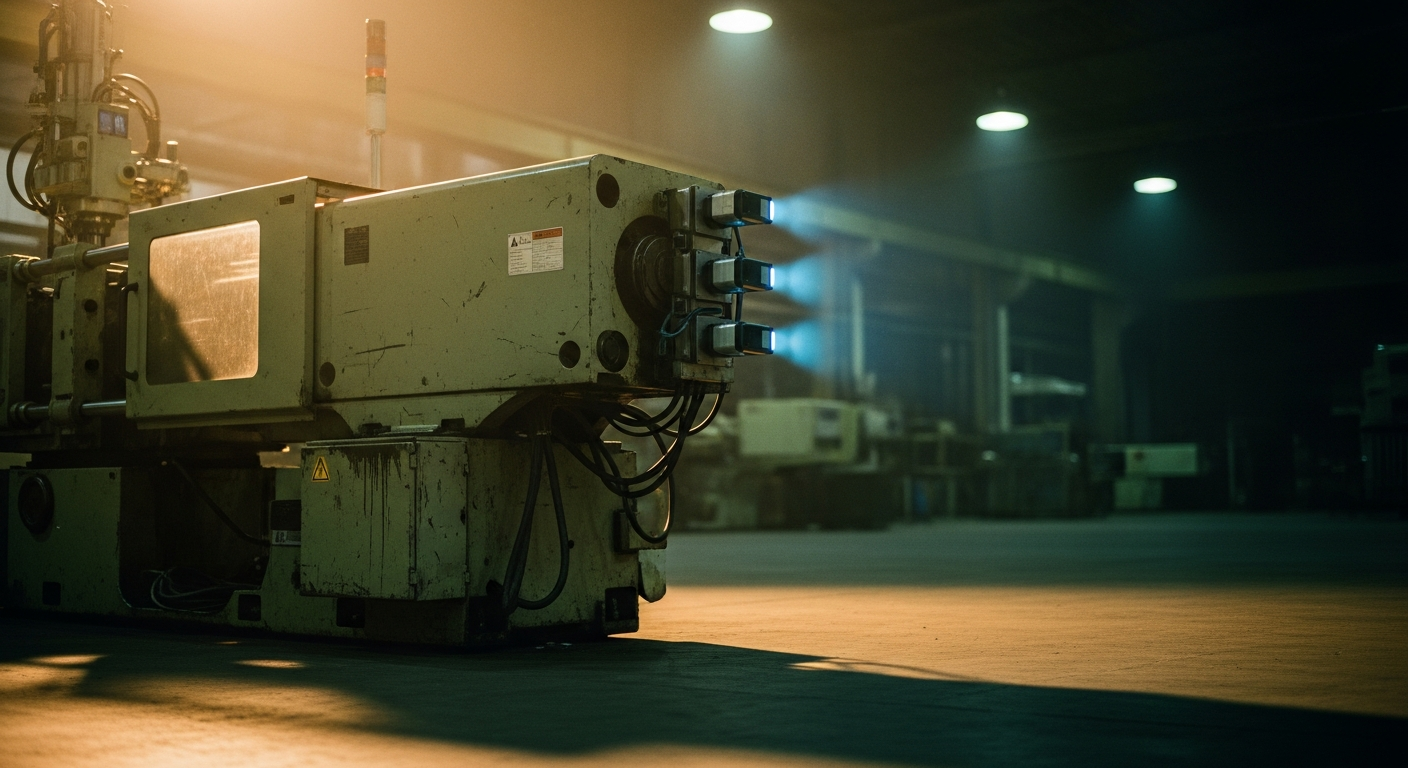
사장님께 드리는 편지 — 공장을 복제하시겠습니까?
독일 중소제조 컨설턴트가 한국 공장 대표에게 보내는 편지. 디지털 트윈은 기술이 아니라, 내 공장을 처음으로 객관적으로 바라보는 행위다.
Want to apply this in your factory?
MOAI helps manufacturing companies adopt AI tailored to their operations.
Talk to us →