Electrical telegraphy is point-to-point distance communicating via sending electric signals over wire, a system primarily used from the 1840s until the late 20th century. It was the first electrical telecommunications system and the most widely used of a number of early messaging systems called telegraphs, that were devised to send text messages more quickly than physically carrying them. Electrical telegraphy can be considered the first example of electrical engineering.
Electrical telegraphy consisted of two or more geographically separated stations, called telegraph offices. The offices were connected by wires, usually supported overhead on utility poles. Many electrical telegraph systems were invented that operated in different ways, but the ones that became widespread fit into two broad categories. First are the needle telegraphs, in which electric current sent down the telegraph line produces an electromagnetic force that moves a needle-shaped pointer into position over a printed list, in order to point to a specific item in that list (such as a letter of the alphabet). Early needle telegraph models used multiple needles, thus requiring multiple wires to be installed between stations. The first commercial needle telegraph system and the most widely used of its type was the Cooke and Wheatstone telegraph, invented in 1837. The second category are armature systems, in which the current activates a telegraph sounder that makes a click; communication on this type of system relies on sending clicks in coded rhythmic patterns. The archetype of this category was the Morse system and the code associated with it, both invented by Samuel Morse in 1838. In 1865, the Morse system became the standard for international communication, using a modified form of Morse's code that had been developed for German railways.
 출처: Wikimedia Commons, CC BY-SA 4.0
Electrical telegraphs were used by the emerging railway companies to provide signals for train control systems, minimizing the chances of trains colliding with each other. This was built around the signalling block system in which signal boxes along the line communicate with neighbouring boxes by telegraphic sounding of single-stroke bells and three-position needle telegraph instruments.
In the 1840s, the electrical telegraph superseded optical telegraph systems such as semaphores, becoming the standard way to send urgent messages. By the latter half of the century, most developed nations had commercial telegraph networks with local telegraph offices in most cities and towns, allowing the public to send messages (called telegrams) addressed to any person in the country, for a fee.
Beginning in 1850, submarine telegraph cables allowed for the first rapid communication between people on different continents. The telegraph's nearly-instant transmission of messages across continents – and between continents – had widespread social and economic impacts. The electric telegraph led to Guglielmo Marconi's invention of wireless telegraphy, the first means of radiowave telecommunication, which he began in 1894.
 출처: Wikimedia Commons, Public domain
In the early 20th century, manual operation of telegraph machines was slowly replaced by teleprinter networks. Increasing use of the telephone pushed telegraphy into only a few specialist uses; its use by the general public dwindled to greetings for special occasions. The rise of the Internet and email in the 1990s largely made dedicated telegraphy networks obsolete.
History
Early work
From early studies of electricity, electrical phenomena were known to travel with great speed, and many experimenters worked on the application of electricity to communications at a distance. All the known effects of electricity – such as sparks, electrostatic attraction, chemical changes, electric shocks, and later electromagnetism – were applied to the problems of detecting controlled transmissions of electricity at various distances.
In 1753, an anonymous writer in the Scots Magazine suggested an electrostatic telegraph. Using one wire for each letter of the alphabet, a message could be transmitted by connecting the wire terminals in turn to an electrostatic machine, and observing the deflection of pith balls at the far end. The writer has never been positively identified, but the letter was signed C.M. and posted from Renfrew leading to a Charles Marshall of Renfrew being suggested. Telegraphs employing electrostatic attraction were the basis of early experiments in electrical telegraphy in Europe, but were abandoned as being impractical and were never developed into a useful communication system.
In 1774, Georges-Louis Le Sage realised an early electric telegraph. The telegraph had a separate wire for each of the 26 letters of the alphabet and its range was only between two rooms of his home.
In 1800, Alessandro Volta invented the voltaic pile, providing a continuous current of electricity for experimentation. This became a source of a low-voltage current that could be used to produce more distinct effects, and which was far less limited than the momentary discharge of an electrostatic machine, which with Leyden jars were the only previously known human-made sources of electricity.
Another very early experiment in electrical telegraphy was an "electrochemical telegraph" created by the German physician, anatomist and inventor Samuel Thomas von Sömmering in 1809, based on an earlier 1804 design by Spanish polymath and scientist Francisco Salva Campillo. Both their designs employed multiple wires (up to 35) to represent almost all Latin letters and numerals. Thus, messages could be conveyed electrically up to a few kilometers (in von Sömmering's design), with each of the telegraph receiver's wires immersed in a separate glass tube of acid. An electric current was sequentially applied by the sender through the various wires representing each letter of a message; at the recipient's end, the currents electrolysed the acid in the tubes in sequence, releasing streams of hydrogen bubbles next to each associated letter or numeral. The telegraph receiver's operator would watch the bubbles and could then record the transmitted message. This is in contrast to later telegraphs that used a single wire (with ground return).
Hans Christian Ørsted discovered in 1820 that an electric current produces a magnetic field that will deflect a compass needle. In the same year Johann Schweigger invented the galvanometer, with a coil of wire around a compass, that could be used as a sensitive indicator for an electric current. Also that year, André-Marie Ampère suggested that telegraphy could be achieved by placing small magnets under the ends of a set of wires, one pair of wires for each letter of the alphabet. He was apparently unaware of Schweigger's invention at the time, which would have made his system much more sensitive. In 1825, Peter Barlow tried Ampère's idea but only got it to work over 200 feet (61 m) and declared it impractical. In 1830 William Ritchie improved on Ampère's design by placing the magnetic needles inside a coil of wire connected to each pair of conductors. He successfully demonstrated it, showing the feasibility of the electromagnetic telegraph, but only within a lecture hall.
In 1825, William Sturgeon invented the electromagnet, with a single winding of uninsulated wire on a piece of varnished iron, which increased the magnetic force produced by electric current. Joseph Henry improved it in 1828 by placing several windings of insulated wire around the bar, creating a much more powerful electromagnet which could operate a telegraph through the high resistance of long telegraph wires. During his tenure at The Albany Academy from 1826 to 1832, Henry first demonstrated the theory of the 'magnetic telegraph' by ringing a bell through one-mile (1.6 km) of wire strung around the room in 1831.
In 1835, Joseph Henry and Edward Davy independently invented the mercury dipping electrical relay, in which a magnetic needle is dipped into a pot of mercury.
From MOAI Insights
새벽 3시, 반장의 귀가 처음으로 받아 적혔다
23년 경력 반장은 사출기 소리만 듣고 불량을 안다. 그 귀가 처음으로 데이터가 되던 밤, 공장에서 가장 불편한 질문이 떠올랐다.
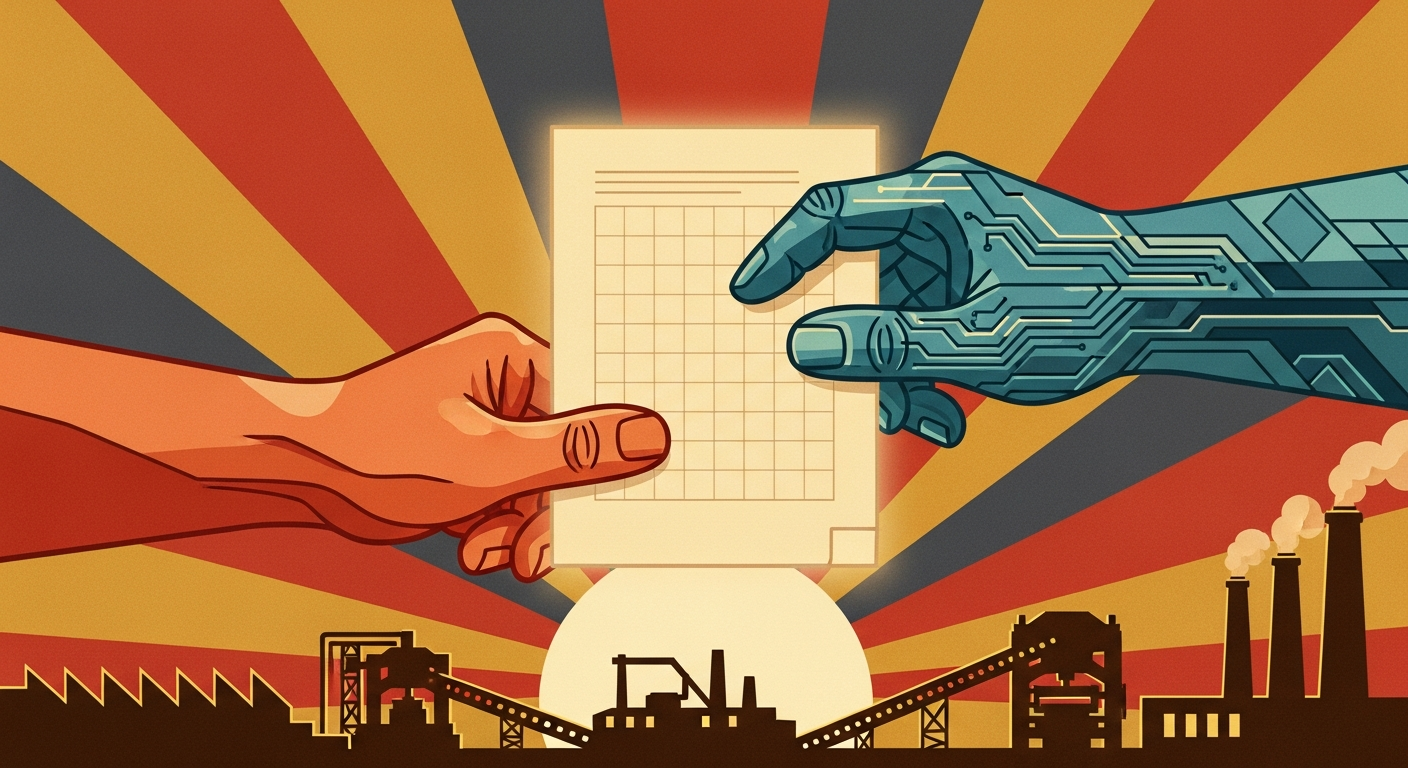
AI가 지시를 내리기 시작하면, 팀장은 무엇을 하는가 — 생산관리자에게 보내는 편지
AI Agent가 작업지시서를 스스로 생성하는 공장에서, 중간관리자의 존재 이유를 다시 묻는 공개 서신.
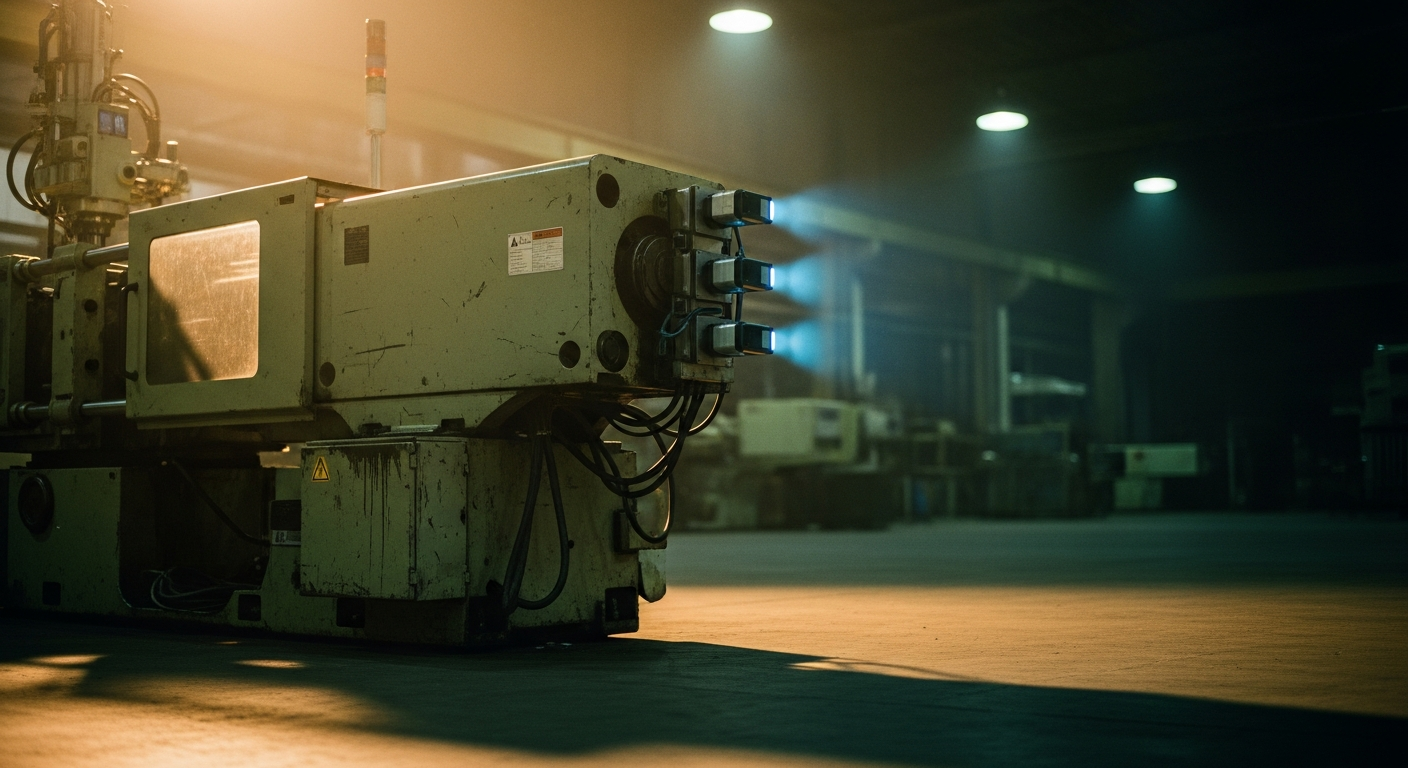
사장님께 드리는 편지 — 공장을 복제하시겠습니까?
독일 중소제조 컨설턴트가 한국 공장 대표에게 보내는 편지. 디지털 트윈은 기술이 아니라, 내 공장을 처음으로 객관적으로 바라보는 행위다.
Want to apply this in your factory?
MOAI helps manufacturing companies adopt AI tailored to their operations.
Talk to us →